
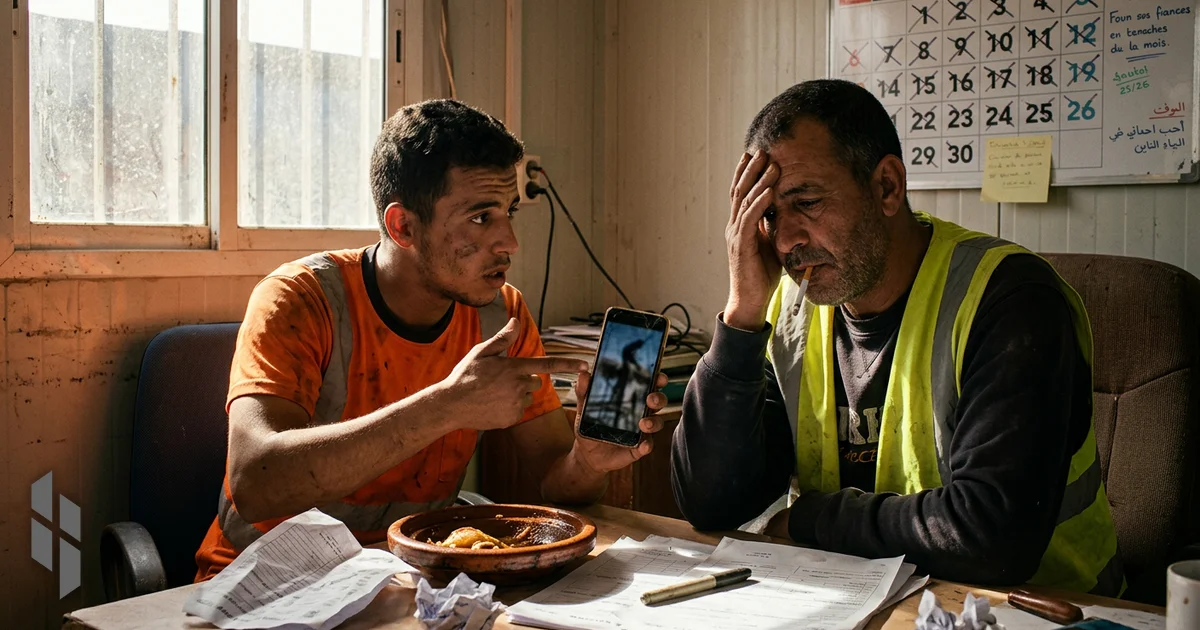
Employer Liability for Workplace Accidents - Morocco (2026)
Employer Liability for Workplace Accidents - Morocco (2026)
1. Introduction: The High Cost of Workplace Incidents
Imagine a bustling construction site in Casablanca or a high-tech manufacturing facility in Tangier Automotive City. A seasoned technician, following standard operating procedures, suddenly suffers a severe injury due to a mechanical failure. Beyond the immediate physical trauma, a complex web of legal questions emerges: Who pays for the medical bills? Is the employer automatically at fault? What are the deadlines for filing a claim in 2026?
In Morocco, the legal landscape governing workplace accidents is built on a foundation of social protection and strict employer responsibility. Unlike standard civil liability, which often requires proving "fault," Moroccan labor law operates on a principle of professional risk. This means that if an accident occurs "by reason of or during the performance of work," the employer is generally held liable for compensation, regardless of whether they were personally negligent.
As we navigate the industrial and digital landscape of 2026, understanding these obligations is not just a matter of human resources—it is a critical component of corporate governance and financial stability. This article provides a comprehensive deep dive into the Moroccan legal framework, the procedural requirements for 2026, and the specific articles of law that every employer and employee must know to ensure compliance and protection.
2. Legal Foundation: The Pillars of Moroccan Occupational Safety
The legal framework for employer liability in Morocco is robust, primarily governed by the Labor Code (Law No. 65-99) and the specific Law No. 18-12 relating to compensation for industrial accidents.
The Core Legislation
To understand your rights and obligations, you must reference these specific legal instruments:
- Law No. 18-12 (The Work Accident Law): This is the primary statute governing compensation. It establishes that any accident occurring to a worker during the performance of their duties is a "work accident."
- Law No. 65-99 (The Labor Code): Specifically, Article 281 mandates that employers must ensure workplaces are kept in a state of cleanliness and provide the necessary safety conditions to guarantee the health of employees.
- Article 349 of the Law on Joint Stock Companies: As noted in recent legal updates for 2026, directors can face personal, joint, and several liability if they fail to integrate mandatory safety protocols into company bylaws.
- Decree No. 2-12-170: This decree specifies the technical health and safety requirements that must be met in various industrial and commercial sectors.
- Reference 4 (General Administrative Conditions): For those working on state contracts, the Decree approving the General Administrative Clauses (CCAG-EM) stipulates that the "Project Owner" (the State) cannot be held liable for accidents involving the contractor's employees; the liability rests solely with the contractor (the employer).
Defining the "Workplace Accident"
Under Moroccan law, an accident is classified as a workplace incident if it meets two criteria:
- It occurs while the employee is under the authority and supervision of the employer.
- It occurs during the "commute"—the journey between the employee's residence and the workplace, or between the workplace and the place where the employee usually takes their meals.
3. Practical Guide: Procedures, Timelines, and Documentation in 2026
In 2026, the Moroccan government has further digitized the reporting process to ensure faster compensation and better oversight by the State Labour Inspectorate.
Step-by-Step Reporting Procedure
If an accident occurs, the following steps are mandatory:
- Immediate First Aid and Notification: The employee (or witnesses) must inform the employer within 24 hours, unless prevented by force majeure.
- Medical Certificate: The victim must obtain an initial medical certificate (Certificat Médical Initial) describing the nature of the injuries and the expected duration of incapacity.
- Employer Declaration: Under Government Decree No. 322/2025, the employer must now submit the accident report electronically via the national portal within 15 working days of becoming aware of the injury.
- Insurance Notification: The employer must notify their insurance carrier. In Morocco, work accident insurance is mandatory. Failure to subscribe to this insurance is a criminal offense.
Required Documentation
To process a claim in 2026, you will typically need:
- The digital declaration receipt from the Labour Inspectorate portal.
- The initial medical certificate.
- A copy of the employee's CNSS (National Social Security Fund) registration.
- A salary statement for the last 12 months to calculate the daily allowance.
Costs and Timelines
- Daily Allowances: Usually paid from the day following the accident, typically amounting to 2/3 of the daily salary for temporary incapacity.
- Permanent Disability: If the accident results in permanent disability, a life annuity is calculated based on the degree of disability and the annual salary.
- Timeline: Most undisputed claims are settled within 3 to 6 months through the insurance company. If a dispute arises, the case moves to the Social Chamber of the First Instance Court.
For more information on how digital shifts are affecting the courts, see our guide on Judicial Digitization: Court Impact Morocco 2026.
4. Key Provisions Explained: Breaking Down the Law
Understanding the technicalities of the law is essential for both risk mitigation and claim filing.
Article 281: The General Duty of Care
Article 281 of the Labor Code is the "Golden Rule" of Moroccan occupational safety. It states that the employer is responsible for the "cleanliness, lighting, heating, and ventilation" of the workplace. In 2026, this has been interpreted by courts to include "digital safety" and ergonomic standards for remote workers. If you are managing a distributed team, you should consult the Remote Work Law Morocco 2026 to ensure your home-office safety protocols are compliant.
Strict Liability vs. Gross Negligence
Moroccan law distinguishes between standard accidents and those caused by "Gross Negligence" (Faute Inexcusable).
- Standard Liability: The employer's insurance covers the fixed compensation.
- Gross Negligence: If the employer was aware of a danger and failed to act (e.g., removing a safety guard from a machine), the court may increase the compensation amount. This additional cost is often not covered by standard insurance and must be paid directly by the employer.
Reference 8: Cybersecurity and Information Systems
In the modern era, "accidents" aren't always physical. Article 17 of the Decree implementing Law 05.20 (Cybersecurity) requires vital infrastructures to appoint a head of information systems security. If a lack of digital security leads to a psychological breakdown or a workplace incident related to system failure, the employer’s failure to follow these cybersecurity protocols could be cited as a basis for liability.
Reference 4: The Role of Subcontractors
A common pitfall occurs in construction and service contracts. According to Reference 4, the primary contractor is responsible for the accidents of their own employees and their subcontractors' employees unless the subcontracting agreement specifically provides otherwise and is insured. The "Project Owner" (the client) is generally shielded from these claims, provided they have verified the contractor's insurance status.
5. Common Mistakes & How to Avoid Them
Even well-intentioned employers often find themselves in legal trouble due to procedural errors.
1. Failure to Register with CNSS
Many employers believe that having private work accident insurance is enough. However, social security registration is a prerequisite for many legal protections. For domestic workers, this has been mandatory since June 2020. Ensure all staff are declared to avoid "joint and several liability" in the event of an injury.
2. Missing the 15-Day Digital Filing Deadline
With the 2026 updates, the transition from paper to digital is strict. Missing the 15-day window to report an accident through the Labour Inspectorate portal can result in administrative fines and may give the insurance company grounds to delay or contest the claim.
3. Neglecting the Hygiene and Safety Committee
Under the Labor Code, companies with more than 50 employees must establish a Hygiene and Safety Committee. Failing to hold regular meetings or document safety audits is often used by plaintiffs' lawyers to prove "Gross Negligence" during litigation.
4. Ignoring the "Commute" Accident
Employers often mistakenly deny liability for accidents occurring outside the office. Remember, the journey to work is legally protected. If an employee is injured in a car accident while driving to a client meeting, it is a workplace accident.
5. Inadequate Training Records
In court, "we told them to be careful" is not a defense. You must have signed attendance sheets for safety training sessions. In 2026, digital logs of safety briefings are increasingly accepted as evidence in Moroccan courts. For more on how digital evidence is handled, see AI in Court: Admissible Evidence? 2026.
6. Conclusion with Key Takeaways
Employer liability in Morocco is a "no-fault" system designed to protect the dignity and livelihood of the worker. However, for the employer, it represents a significant administrative and financial responsibility that requires constant vigilance. As we move through 2026, the integration of digital reporting and stricter oversight means that compliance is no longer optional—it is automated.
By adhering to the Labor Code, maintaining robust insurance, and respecting the new digital filing deadlines, businesses can protect their employees and their bottom line.
Summary of Key Takeaways:
- Strict Liability: Employers are liable for accidents occurring during work or the commute, regardless of fault.
- Mandatory Insurance: Every employer must have a valid work accident insurance policy.
- Digital Reporting: Accidents must be reported via the Labour Inspectorate portal within 15 working days as of 2026.
- Article 281 Compliance: Maintain high standards of workplace hygiene and safety to avoid "Gross Negligence" claims.
- Documentation is Key: Keep meticulous records of safety training and CNSS declarations.
Frequently Asked Questions
An accident is considered a workplace incident if it occurs during the performance of work duties or during the commute between the employee's home and their place of work.
The employee must notify the employer within 24 hours. The employer must then file a digital declaration with the Labour Inspectorate within 15 working days.
Generally, the employer's mandatory work accident insurance covers medical expenses, hospitalisation, and daily allowances for the victim.
Yes, if the employee can prove 'Gross Negligence' (Faute Inexcusable) on the part of the employer, the court may award additional damages beyond the standard insurance payouts.
Yes, since 2020, it is mandatory to register domestic workers with the CNSS and provide insurance coverage for workplace accidents.
The employer will be personally liable for all compensation, medical costs, and life annuities, and may face criminal prosecution and heavy fines.
Get weekly Moroccan legal updates 📬
Exclusive insights on Moroccan law, citizen rights, and new court decisions — delivered straight to your inbox.
No spam. Unsubscribe anytime.
Have a question about labor law?
Consult 9anon AI now and get accurate, instant answers about your legal situation in seconds.
Related Articles
WhatsApp Admin Liability: Legal Risks in Morocco 2026
Are you a WhatsApp group admin? Discover your legal responsibilities in Morocco in 2026. Avoid liability for content posted by other members.
Uber Driver Rights: Your Legal Rights in Morocco 2026
Driving for Uber or Careem? Learn your worker rights in Morocco, whether you're independent or an employee. Important legal facts you need to know for 2026.
Remote Work Law Morocco 2026: Your Full Rights
Working remotely in Morocco? Know your rights under the 2026 labor code. Discover required reimbursements and data security to protect your rights!