
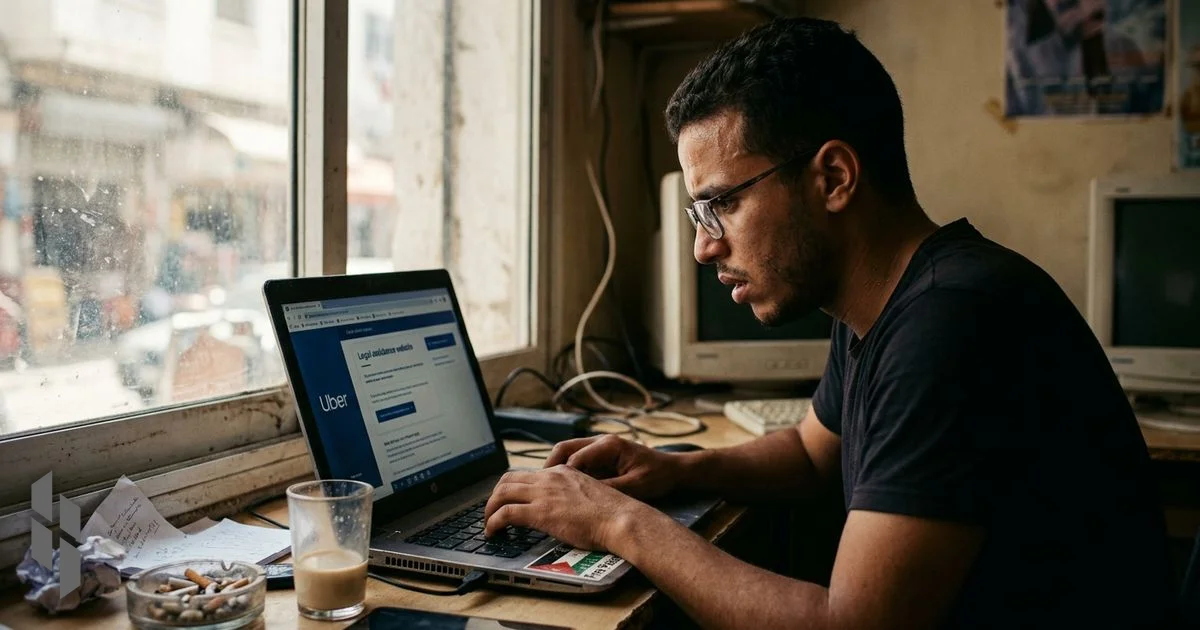
Uber Driver Rights: Your Legal Rights in Morocco 2026
Uber Driver Rights: Your Legal Rights in Morocco 2026
Introduction: The Reality of the Gig Economy in Morocco
Imagine you are driving through the bustling streets of Casablanca or the palm-lined avenues of Marrakech in 2026. You have your smartphone mounted on the dashboard, the Uber app is "online," and you are providing a vital service to tourists and locals alike. However, a sudden "account deactivation" notification pops up, or you are stopped by authorities questioning your permit. In that moment, the flexibility of the "gig economy" feels less like freedom and more like legal vulnerability.
For years, the status of ride-sharing drivers in Morocco has occupied a "grey zone" of the law. While the convenience of app-based transport is undeniable, the legal framework has struggled to keep pace with technology. As we navigate 2026, understanding your rights is no longer optional—it is a necessity for your financial and legal survival.
In this comprehensive guide, we will explore whether you are considered an employee or an independent contractor under the Morocco Labor Code, what specific transport licenses are required by the Ministry of Transport, and how recent judicial trends are shaping the future of digital platform work. You will learn how to protect your livelihood, what to do in case of an accident, and how to ensure your operations comply with the Code de la Route and the General Tax Code (CGI).
Legal Foundation: The Statutes Governing Your Work
The legal landscape for an Uber driver in Morocco is not found in a single "Uber Law." Instead, it is a mosaic of different codes that regulate transport, labor, and digital services. To understand your rights in 2026, you must look at these five primary legal pillars:
1. Law No. 52-05: The Road Code (Code de la Route)
This is the most critical document for any driver. Article 1 of Law 52-05 (promulgated by Dahir No. 1-10-07) explicitly states that no person may drive a motor vehicle on public roads without a valid driving license issued by the administration that matches the vehicle category. For professional drivers, this also involves the "Professional Driver Card."
2. Decree No. 2-69-351: Regulation of Private Vehicles
As referenced in historical Moroccan transport law, Article 1 of Decree No. 2-69-351 establishes that any person or enterprise engaged in the rental of private cars (with or without drivers) must file a declaration with the Ministry of Public Works and Transport. This decree forms the basis for how "VTC" (Véhicule de Transport avec Chauffeur) services are categorized in Morocco, distinguishing them from traditional "Petit" or "Grand" taxis.
3. Law No. 65-99: The Labor Code (Code du Travail)
The most debated question in 2026 remains: Is an Uber driver an employee? Article 6 of Law 65-99 defines an employee as any person who has committed to providing their professional activity, under the direction of one or more employers, in exchange for a salary. If a driver can prove "legal subordination"—meaning Uber controls their hours, prices, and methods—they may claim rights under this code, including protection against unfair dismissal.
4. Law No. 09-08: Protection of Personal Data
Since Uber operates via an algorithm, Law No. 09-08 is vital. It regulates how your personal data and location are tracked. As a driver, you have the right to know how your data is being used to calculate your "rating" or your earnings, overseen by the CNDP (Commission Nationale de contrôle de la protection des Données à caractère Personnel).
5. Law No. 24-96: Post and Telecommunications
Because ride-sharing relies on telecommunications networks, Article 41 of Law 24-96 and subsequent amendments govern the licenses required for digital services. This law ensures that the platforms providing the connection between driver and passenger are operating within the regulatory framework of the ANRT (Agence Nationale de Réglementation des Télécommunications).
Practical Guide: Operating Legally in 2026
Operating as a driver in Morocco requires more than just a car and an app. To avoid vehicle impoundment or heavy fines, follow this step-by-step procedure.
Step 1: Obtaining the Correct License
Under Article 3 of Law 52-05, if you are a Moroccan national returning from abroad or a foreign resident, you have a maximum of one year to convert your foreign license into a Moroccan driving license. After this period, you must pass the Moroccan driving exam. For professional ride-sharing, you generally need a Category B license, but you must also ensure your vehicle is registered for "Transport à titre onéreux" (Transport for Hire).
Step 2: Vehicle Requirements and Declarations
According to Decree No. 2-69-351, your vehicle must be declared. The declaration must include:
- The number of vehicles used.
- The technical characteristics of the vehicle.
- Registration numbers.
- Insurance specifically covering "transport of passengers for a fee." Standard private insurance is insufficient and will be voided in the event of an accident involving a paying passenger.
Step 3: Tax and Social Security Registration
In 2026, the Moroccan government has tightened the "Auto-Entrepreneur" regime. To drive for Uber legally, you should:
- Register as an Auto-Entrepreneur to obtain a Tax Identity (IF) and a Common Enterprise Identifier (ICE).
- Register with the CNSS (Caisse Nationale de Sécurité Sociale). Under recent reforms, even independent gig workers are required to contribute to the mandatory health insurance (AMO) to access healthcare rights.
Step 4: Contractual Review
Before clicking "Accept" on the terms of service, review the arbitration clauses. Many platforms attempt to bypass Moroccan courts by citing foreign jurisdictions. However, Moroccan public policy often dictates that labor disputes occurring on Moroccan soil must be heard by Moroccan Social Chambers within the Court of First Instance.
Key Provisions Explained: Your Protections as a Driver
The Right to Fair Compensation
While Uber does not set a "salary," the Moroccan Labor Code sets a Minimum Wage (SMIG). If a court reclassifies a driver as an employee, the platform would be liable for back-paying the difference between the driver's net earnings and the SMIG, along with overtime pay.
Protection Against Arbitrary Deactivation
One of the most significant "rights" in 2026 is the right to a defense. If Uber deactivates your account based on a low rating or a single passenger complaint, this can be viewed as an "Abusive Termination" under Article 41 of the Labor Code. You have the right to request the evidence used against you and to challenge the decision before a labor inspector (Inspecteur du Travail).
Health and Safety at Work
Under Law 65-99, employers (or platform entities acting as de facto employers) are responsible for the safety of their workers. This includes ensuring that the "algorithmic management" does not force drivers to work excessive hours that lead to fatigue and road accidents. You are encouraged to read about hygiene and safety committee duties 2026 to understand the standards expected in Moroccan workplaces.
Data Privacy and Algorithmic Transparency
Under Law 09-08, you have the "Right of Access" to your data. If you suspect the algorithm is discriminating against you—for example, by giving you fewer rides because of your location or age—you can file a complaint with the CNDP. The platform must prove that its automated decision-making is fair and non-discriminatory.
Common Mistakes & How to Avoid Them
1. Using Standard Private Insurance
This is the most dangerous mistake. If you have an accident while an Uber passenger is in the car and you only have "Usage Privé" insurance, the insurance company will refuse to pay. You must have "Transport de Personnes" insurance. Refer to the employer liability for workplace accidents 2026 guide to understand how liability shifts in professional contexts.
2. Ignoring Tax Obligations
Many drivers believe that because the money is deposited digitally, the Direction Générale des Impôts (DGI) cannot see it. In 2026, Moroccan banks and digital platforms share data with tax authorities. Failing to declare your income can lead to penalties of up to 25% of the tax due. You should stay updated on personal income tax brackets 2026 to ensure you are withholding the correct amounts.
3. Failing to Document "Subordination"
If you intend to sue for employee rights, you must keep evidence. Save screenshots of:
- Messages from Uber giving you direct orders.
- Threats of deactivation if you don't accept certain rides.
- Fixed pricing structures where you have no room to negotiate. This evidence is crucial for the Inspecteur du Travail to determine the nature of your relationship.
4. Operating Without a Professional Card
The "Carte Professionnelle" is becoming a mandatory requirement for all commercial drivers in Morocco. Operating without it can lead to your vehicle being impounded for up to 30 days under the Code de la Route.
Conclusion: Navigating the Future of Transport in Morocco
Being an Uber driver in Morocco in 2026 is a blend of entrepreneurial opportunity and legal complexity. While the platform offers flexibility, the Moroccan legal system is increasingly moving toward protecting the "human" element of the gig economy. By ensuring you have the correct licenses under Law 52-05, registering for social security, and maintaining proper professional insurance, you can mitigate the risks of this profession.
As the Moudawana and the Labor Code continue to evolve, the distinction between "independent contractor" and "employee" will likely be settled by the Moroccan Court of Cassation. Until then, your best defense is a proactive offense: stay documented, stay insured, and stay informed.
Key Takeaways for Drivers:
- Licensing: Ensure your driving license is converted to a Moroccan one within one year of residency (Article 2, Law 52-05).
- Status: You are currently viewed as an independent contractor, but "legal subordination" could allow you to claim employee rights under Law 65-99.
- Insurance: Standard insurance is not enough; you need professional passenger transport coverage.
- Compliance: Register as an Auto-Entrepreneur and contribute to the CNSS to secure your health and pension rights.
- Data: Use Law 09-08 to protect your digital rights and challenge unfair algorithmic deactivations.
Related Search Terms
9anoun ai, 9anon ai, kanon ai, kanoun ai, qanon ai, qanoun ai
Frequently Asked Questions
Uber operates in a regulatory grey area but is generally tolerated if drivers use licensed VTC vehicles or work through authorized transport companies. Drivers must ensure they have the proper administrative declarations required by the Ministry of Transport.
Under Article 2 of Law 52-05, you can drive with a valid foreign license for up to one year after entering Morocco. After one year, you must exchange it for a Moroccan license or pass the local driving test.
You can file a complaint with the Labor Inspectorate or the CNDP if the deactivation was based on unfair algorithmic data. If a court finds you are a 'de facto' employee, you may be entitled to compensation for abusive termination under the Labor Code.
Yes, all income earned in Morocco is subject to Income Tax (IR). Most drivers register as Auto-Entrepreneurs to benefit from a simplified tax rate and legal status.
As an independent driver or Auto-Entrepreneur, you are now required to contribute to the CNSS under the 'Workers Non-Salaried' (TNS) scheme, which provides mandatory health insurance (AMO).
You must obtain a specific 'Transport à titre onéreux' policy. Standard private insurance will not cover injuries to passengers or third parties if you are using the vehicle for commercial purposes.
Get weekly Moroccan legal updates 📬
Exclusive insights on Moroccan law, citizen rights, and new court decisions — delivered straight to your inbox.
No spam. Unsubscribe anytime.
Have a question about labor law?
Consult 9anon AI now and get accurate, instant answers about your legal situation in seconds.
Related Articles
Lawyers' Discipline 2026: Your Rights Explained Morocco
Are lawyers being disciplined directly by courts in Morocco? Learn your rights and the new disciplinary procedures to safeguard your interests in 2026. Understand the reforms!
Vulnerable Groups: Enhanced Legal Protections in Morocco 2026
Understand the new measures protecting vulnerable groups in Morocco's legal system. Learn your rights and how to get help now. Full guide for 2026.
Lawyers' Discipline: What's Changing in Morocco 2026?
Moroccan lawyers face new disciplinary rules in 2026. Learn about new powers, your rights, and how to file complaints. Get the full guide.