
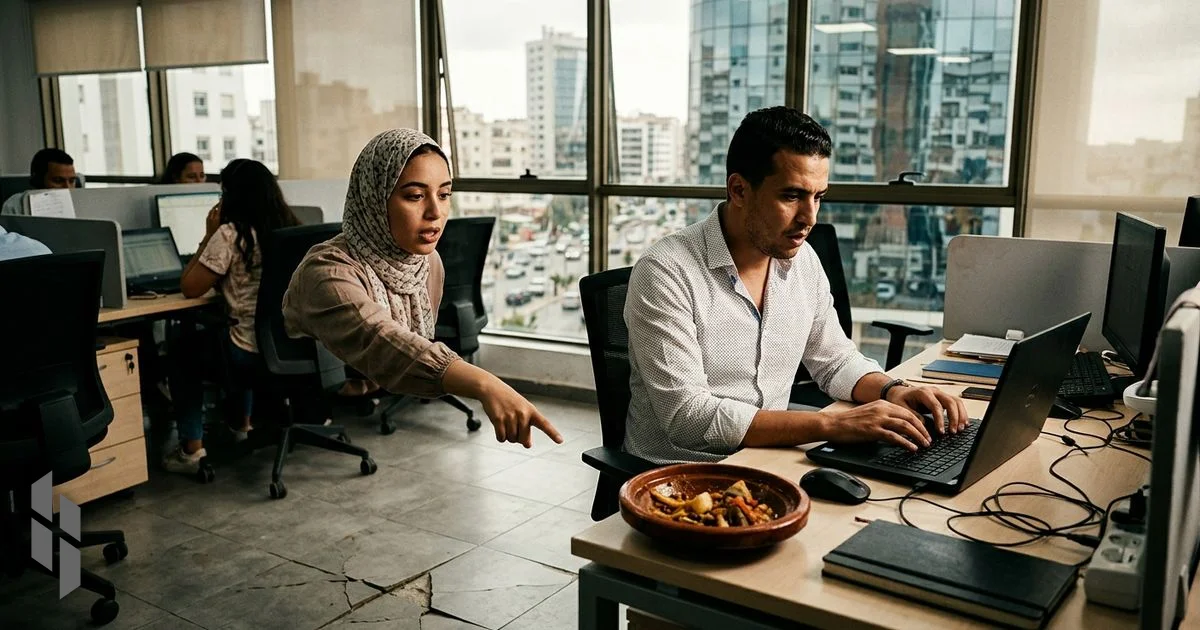
Hygiene & Safety Committees: Your 2026 Duties
Hygiene & Safety Committees: Your 2026 Duties
In the rapidly evolving industrial landscape of Morocco, the safety of the workforce is no longer just a moral imperative—it is a rigorous legal requirement. Imagine a textile factory in Tangier or a pharmaceutical plant in Casablanca where dust levels rise above permissible limits or machinery remains unshielded. Without a structured oversight body, these risks often go unnoticed until a tragedy occurs. This is where the Hygiene and Safety Committee (Comité d'Hygiène et de Sécurité) becomes the most critical organ within a Moroccan enterprise.
As we move through 2026, the Moroccan government has intensified its focus on occupational health, integrating digital reporting and stricter compliance audits. Whether you are a business owner, a Human Resources manager, or an employee representative, understanding the specific duties of these committees is essential to avoid heavy fines and, more importantly, to ensure every worker returns home safely. In this guide, we will explore the legal foundations, the mandatory composition of these committees, and the specific procedural duties required under the Moroccan Labor Code and supporting decrees.
Legal Foundation: The Pillars of Occupational Health in Morocco
The legal framework governing hygiene and safety in Morocco is robust, primarily anchored in Law No. 65-99, commonly known as the Moroccan Labor Code. However, the legal architecture extends beyond the code to include specific Royal Decrees (Dahirs) and Ministerial Orders that address specialized industrial risks.
The Moroccan Labor Code (Law 65-99)
The primary authority for the creation of safety committees is found in Articles 336 to 344 of the Labor Code. Article 336 explicitly mandates that every enterprise employing at least 50 employees must establish a Hygiene and Safety Committee. This threshold is a "hard line" in Moroccan law; failing to constitute this committee once the 50th employee is hired constitutes a direct violation of labor regulations.
Specialized Health Regulations
Beyond the general Labor Code, specific historical and modern decrees provide the technical standards for safety. For instance, Royal Decree (Marssoum Malaki) No. 719.68 (Reference 7) remains a foundational text for industries involving hazardous dust. It outlines specific measures for "establishments where employees are habitually exposed to the inhalation of industrial dust." In 2026, these regulations are read in conjunction with modern environmental standards to ensure that "physical, mental, and social safety," as cited in the Decree on the Competencies of the Ministry of Health (Reference 6), is maintained.
Institutional Oversight
The Ministry of Health and the Ministry of Labor work in tandem to oversee these committees. Under Article 1 of the Decree relating to the Ministry of Public Health (Reference 6), the Ministry is tasked with "preparing and implementing the government policy related to the health of citizens" and conducting "supervision over the practice of medical and pharmaceutical professions," which includes the occupational physicians who sit on your safety committees.
Practical Guide: Establishing and Running Your Committee in 2026
Setting up a committee is not a one-time event; it is a procedural commitment. Follow these steps to ensure your organization remains compliant with 2026 standards.
1. Mandatory Composition
Under Article 337 of the Labor Code, the committee must have a specific structure to ensure balanced representation:
- The Employer or their representative: Acts as the Chairperson.
- The Head of Safety: Or a technician specialized in safety matters within the firm.
- The Occupational Physician: Whose role is vital for medical surveillance.
- Two Employee Representatives: Elected by the existing staff representatives.
2. Required Documentation and Reporting
In 2026, the "paper trail" is increasingly digital, but the legal requirements for content remain strict.
- The Annual Report: According to Article 342, the committee must produce an annual report at the end of each calendar year. This report details the evolution of professional risks in the company and the effectiveness of the prevention measures taken.
- Meeting Minutes: Minutes must be recorded for every meeting and kept in a register available for inspection by the Labor Inspector.
- The Safety Plan: A proactive document outlining the goals for the upcoming year.
3. Timelines and Frequency
The committee does not just meet when an accident happens. Article 339 requires the committee to meet at least once every quarter. However, an extraordinary meeting must be convened immediately following any serious accident or any incident that could have resulted in a serious consequence.
4. Costs and Logistics
The employer is responsible for all costs associated with the committee’s functioning. This includes providing a meeting space, the time taken by members to attend (which is considered paid working time), and any specialized training required for the employee representatives to perform their duties effectively.
Key Provisions Explained: What the Committee Actually Does
The duties of the Hygiene and Safety Committee are not merely advisory; they are operational. Let’s break down the most important legal provisions.
Risk Identification and Prevention
The core duty, as implied by Article 338, is the detection of professional risks. This involves a constant "walk-through" of the premises. In 2026, this often includes monitoring "new technologies" and "digital stressors." If your company operates in the industrial sector, you must pay specific attention to the provisions of Decree No. 719.68 regarding dust and chemical exposure. The committee is tasked with ensuring that PPE (Personal Protective Equipment) is not only provided but is appropriate for the specific biological or chemical risks present.
Oversight of Occupational Medicine
The committee serves as the bridge between the employer and the occupational physician. They must ensure that the medical service is properly equipped. Under Article 304 of the Labor Code, the occupational doctor's primary role is preventive. The committee monitors whether employees are receiving their mandatory annual check-ups and whether the "health map" of the company (as discussed in Reference 2 regarding health planning) aligns with the actual risks on the factory floor.
Investigation of Accidents
Whenever a work accident occurs, the committee must conduct an inquiry. This is not to assign blame, but to identify the technical or organizational failure. In 2026, the Ministry of Health (Reference 6) emphasizes "coordination with partners" to raise the health level in the country. Your committee’s internal investigation is a micro-level execution of this national policy.
Employee Education and Training
The committee is legally responsible for organizing safety drills and training sessions. This includes fire safety, first aid, and the correct handling of hazardous materials. Under the framework of Moroccan Commercial Law, maintaining a safe workplace is also a form of business compliance that protects the company from civil liability.
Common Mistakes & How to Avoid Them
Even well-intentioned companies often stumble on the technicalities of Moroccan labor law. Here are the most frequent pitfalls seen in 2026:
- Ignoring the 50-Employee Threshold: Many SMEs grow quickly and forget that the moment they hit 50 employees, they have a 3-month window to form the committee. Failure to do so can lead to fines ranging from 2,000 to 5,000 MAD per violation, which can multiply if the non-compliance persists.
- Excluding the Occupational Physician: Some employers view the doctor as an "outside contractor." Legally, the doctor is a core member of the committee. Their absence from meetings can invalidate the committee’s decisions.
- Lack of "Real" Meetings: Holding "ghost meetings" where minutes are written but no discussion occurs is a dangerous game. In the event of a lawsuit following an accident, the Commercial Courts (see Commercial Courts: Investment Disputes) will scrutinize these records. If the records are found to be fraudulent, the employer may face criminal negligence charges.
- Failure to Act on Recommendations: If the committee identifies a broken guardrail and the employer ignores the written recommendation, the employer’s "intentional fault" is established, which can lead to the loss of insurance coverage for work accidents.
To avoid these, ensure that the safety head has a direct line to the CEO and that the budget for safety improvements is treated as a mandatory operational expense, not an optional extra.
Conclusion with Key Takeaways
The Hygiene and Safety Committee is the heartbeat of a compliant Moroccan business in 2026. By adhering to the Moroccan Labor Code (Law 65-99) and specialized decrees like Decree 719.68, companies do more than just avoid fines—they build a culture of trust and productivity. As the Moroccan economy continues to modernize, the integration of these committees into the daily workflow is the hallmark of a sophisticated, sustainable enterprise.
- Threshold: Mandatory for all companies with 50+ employees (Art. 336).
- Frequency: Must meet at least once every quarter (Art. 339).
- Reporting: An annual report on risks and prevention is compulsory (Art. 342).
- Composition: Must include the employer, safety head, occupational doctor, and two employee reps (Art. 337).
- Liability: Failure to comply leads to fines and increased civil liability in case of accidents.
Frequently Asked Questions
Under Article 336 of the Moroccan Labor Code, any company employing at least 50 staff members is legally obligated to form a Hygiene and Safety Committee.
The committee must include the employer (or representative), the head of safety or a safety technician, the occupational physician, and two representatives elected by the staff delegates.
According to Article 339, the committee is required to meet at least once every three months (quarterly), or more frequently in the event of a serious accident.
Employers can face fines ranging from 2,000 to 5,000 MAD for failing to establish the committee, and they may face criminal negligence charges if a serious accident occurs in the absence of required safety oversight.
Yes, the occupational physician is a mandatory member of the committee as per Article 337, providing essential medical expertise on workplace health and prevention.
Yes, the time spent by members attending committee meetings is considered actual working time and must be paid at the normal wage rate by the employer.
Get weekly Moroccan legal updates 📬
Exclusive insights on Moroccan law, citizen rights, and new court decisions — delivered straight to your inbox.
No spam. Unsubscribe anytime.
Have a question about labor law?
Consult 9anon AI now and get accurate, instant answers about your legal situation in seconds.
Related Articles
CSR & Labor Law: What You Need to Know 2026
What are the CSR obligations for companies under labor law in Morocco? Integrate with risk assessments for compliance in 2026 now!
Executive Contracts: Non-Compete Clauses 2026
Does your employment contract include a non-compete clause? Understand your rights and the validity of these clauses in executive contracts in Morocco.
Remote Work Law Morocco 2026: Your Full Rights
Working remotely in Morocco? Know your rights under the 2026 labor code. Discover required reimbursements and data security to protect your rights!