
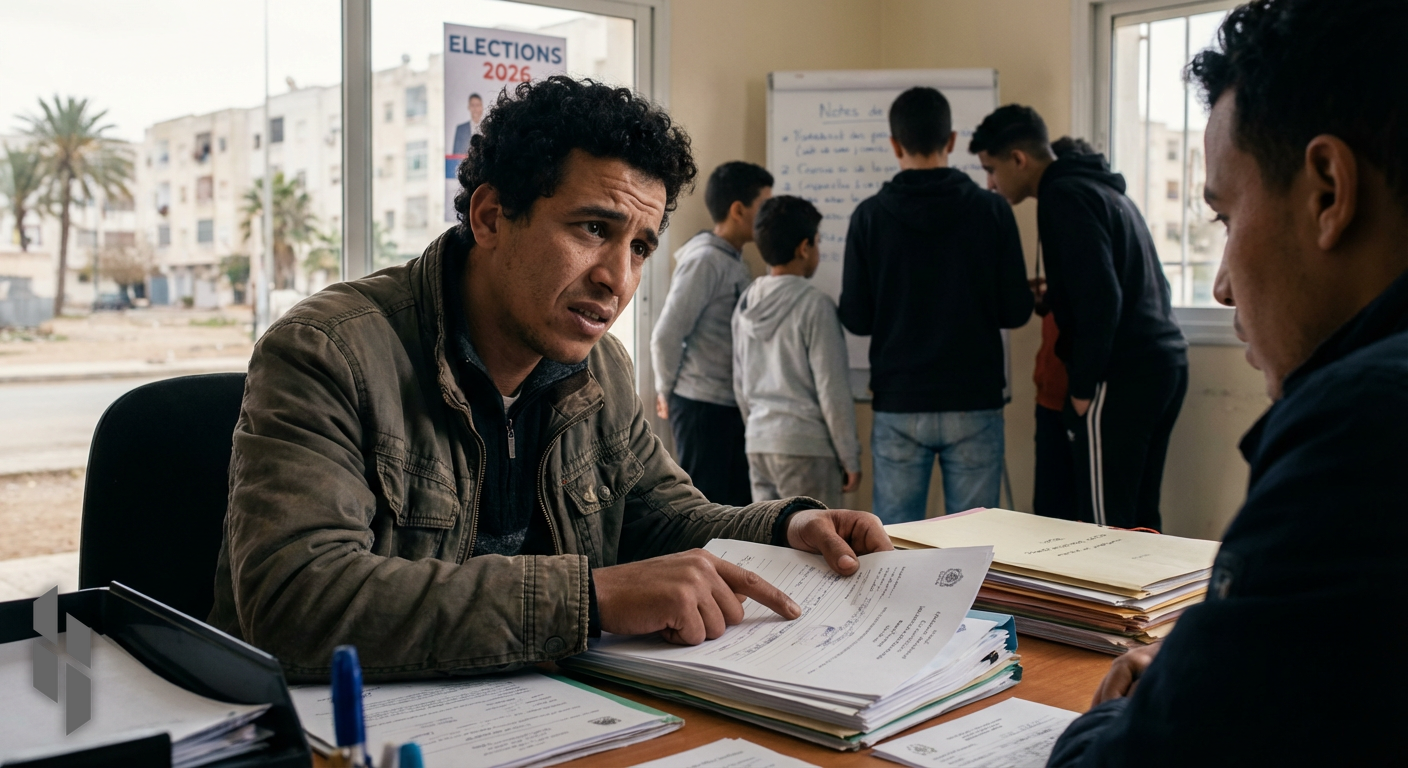
Youth Political Participation Reforms in Morocco: What Do They Mean?
Youth Political Participation Reforms in Morocco: What Do They Mean?
The political landscape in Morocco is undergoing a significant transformation, with a renewed focus on the role of the younger generation in shaping the nation’s future. As the Kingdom moves toward upcoming electoral cycles, including the highly anticipated 2026 elections, the integration of youth into the socio-economic and political fabric has become a constitutional and legislative priority.
Historically, Morocco has defined itself as a constitutional, democratic, and social monarchy (Article 1 of the Constitution). Within this framework, the state has increasingly recognised that the energy of its youth is the primary engine for national development. This article explores the legal mechanisms and institutional reforms designed to empower young Moroccans and address the challenges they face, particularly regarding political engagement and unemployment.
The Constitutional and Institutional Framework for Youth
The Moroccan legal system provides a robust foundation for youth participation. Under Article 90 of the Constitution, the Head of Government exercises regulatory power, which has been utilised to create specific incentives for youth engagement. A primary example is Decree No. 2.23.361 (October 2023), which established the "Morocco Youth Prize." This initiative is not merely symbolic; it aims to reward excellence and encourage young citizens to take an active role in civic life.
Beyond awards, the institutional architecture of Morocco includes high-level advisory bodies. The National Council for Youth and the Future (Conseil National de la Jeunesse et de l'Avenir) serves as a critical bridge between the monarchy and the younger demographic. As established by Royal Dahir, this Council is tasked with:
- Conducting research and studies to assist in defining high-level policies for youth.
- Preparing young Moroccans to defend national sovereignty and independence.
- Integrating youth into the "Great Arab Maghreb" project and international partnerships.
Addressing Unemployment Through Education and Training
One of the most persistent barriers to political and social participation is economic instability. High rates of unemployment among graduates can lead to disillusionment with the political process. Moroccan law addresses this through the functions of the National Council for Youth and the Future, specifically Article 2 of its founding Dahir.
The Council is legally mandated to adapt the education and vocational training systems to meet the actual requirements of the Moroccan economy. Its responsibilities include:
- Data Collection: Gathering quantitative and qualitative data regarding the labour market and regional economic needs.
- Structural Reforms: Proposing incentives and structural reforms to promote employment.
- Skill Alignment: Studying ways to adapt the qualifications taught in institutes to respond to the skills demanded by the current market.
By legally linking education to the national production system, the state aims to transform youth from passive observers into active "good citizens" who contribute to the economy, thereby making their political participation more meaningful.
Youth Representation in Social Dialogue and Elections
Morocco has pioneered a multi-stakeholder approach to governance known as "Social Dialogue." Under the Dahir relating to the Advisory Council for Following Up on Social Dialogue, youth interests are represented alongside trade unions, government ministries (such as Finance, Interior, and Employment), and economic federations.
The National Council for Youth and the Future holds a permanent seat in these dialogues (Article 1 of the relevant Dahir). This ensures that when the government discusses investments, labour laws, or economic activation, the specific perspectives of the younger generation are formally considered.
In the context of elections, Moroccan law emphasizes the principles of transparency and direct participation. For instance, in specific communal or representative elections, the law mandates secret and personal voting (Article 10 of the Dahir on the Moroccan Jewish Community, reflecting general electoral principles). As we approach the 2026 elections, these principles of direct universal suffrage are the tools through which youth can influence the legislative agenda.
Practical Applications and Real-World Impact
For a young Moroccan citizen, these laws manifest in several practical ways:
- Political Candidacy: Reforms often include "youth lists" or quotas in local and national elections to ensure that legislative bodies are not dominated solely by older generations.
- Civic Education: The mandate of the National Council for Youth and the Future involves fostering a sense of duty and "good citizenship," encouraging youth to view voting not just as a right, but as a mechanism for national defense and stability.
- Administrative Recourse: Legal frameworks provide clear paths for contesting election results or administrative decisions, ensuring that the youth's voice is protected by the rule of law.
Conclusion: Key Takeaways
The reform of youth political participation in Morocco is a multi-faceted legal project. It combines constitutional guarantees with practical administrative decrees to ensure that the "living forces of the nation" are not left on the sidelines.
Key points to remember:
- Constitutional Status: Morocco is a constitutional monarchy where youth participation is viewed as essential for democratic stability.
- Institutional Support: Bodies like the National Council for Youth and the Future provide an advisory link between the youth and the highest levels of government.
- Economic Linkage: Legal reforms prioritize solving unemployment by aligning vocational training with the needs of the national economy.
- 2026 Outlook: The upcoming elections represent a critical opportunity for young people to utilize these legal frameworks to influence public policy.
By understanding these laws, young Moroccans can better navigate the political system and contribute to the "Great Arab Maghreb" and the broader international community.
Get weekly Moroccan legal updates 📬
Exclusive insights on Moroccan law, citizen rights, and new court decisions — delivered straight to your inbox.
No spam. Unsubscribe anytime.
Have More Legal Questions?
Consult 9anon AI now and get accurate, instant answers about your legal situation in seconds.
Related Articles
Check Offences Reform: 2% Settlement Fine 2026
The essential guide to Morocco's 2026 check law reform: understand the 2% settlement fine, new penalties, and family exceptions.
Law 03.23 Criminal Procedure: Cybercrime Impact 2026
Understand the new changes in Law 03.23 of the Criminal Procedure Code and its impact on cybercrime in Morocco. A comprehensive 2026 guide.
Real Estate & Family for MREs: Digitization 2026
Your guide as an MRE to obtaining online administrative and real estate documents, including building permits and custody papers in 2026.