
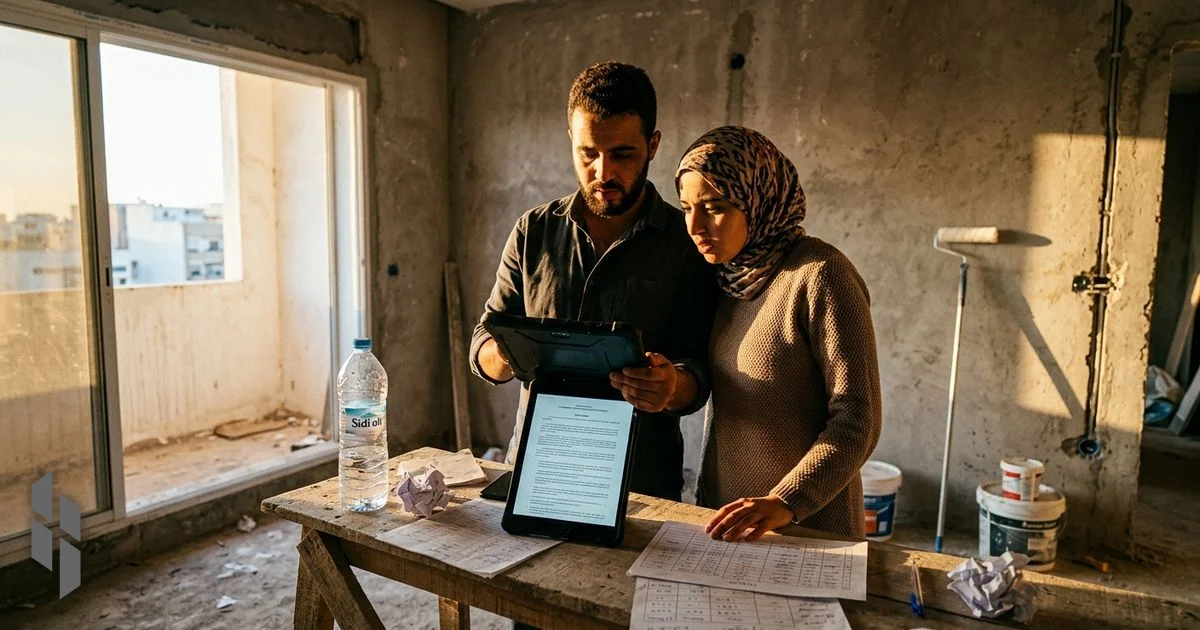
Notary Fees: Law 39.09 Repeal's Impact on Property Sales 2026
Notary Fees: Law 39.09 Repeal's Impact on Property Sales 2026
Imagine you have finally found your dream home in Casablanca or a serene riad in Marrakech. You have negotiated the price, secured your financing, and are ready to sign the contract. Suddenly, you are presented with a breakdown of closing costs that seems significantly different from what your colleagues paid just a few years ago. You hear whispers about Law 39.09, its repeal, and how the landscape of notary fees and property registration has shifted in 2026.
Navigating the Moroccan real estate market requires more than just financial readiness; it demands a keen understanding of the evolving legislative framework. Whether you are a first-time buyer, a civil servant purchasing state-owned property, or an international investor, the rules governing how much you pay to formalise your sale have undergone critical transformations. In this comprehensive guide, we will break down the current state of notary fees, the impact of recent legislative repeals, and the specific protections afforded to buyers under the Moroccan Code of Obligations and Contracts.
Legal Foundation: The Pillars of Moroccan Property Law
To understand the current fee structure in 2026, we must look at the primary legislation that governs real estate transactions and the professionals who oversee them. Property law in Morocco is not found in a single document but is spread across several codes and specific decrees.
The Code of Obligations and Contracts (Dahir forming the DOC)
The bedrock of all Moroccan civil transactions is the Dahir of 9 Ramadan 1331 (August 12, 1913), commonly known as the Code of Obligations and Contracts (DOC). Specifically, Article 488 and subsequent sections define the nature of a sale, while recent amendments have introduced rigorous protections for buyers.
Law No. 107.12 and Law No. 44.00 (VEFA)
When discussing property "in progress" (Vente en l'État Futur d'Achèvement or VEFA), Law No. 107.12 (which amended Law 44.00) is the governing authority. As cited in Reference 5, this law ensures that any sale of a building under construction must follow strict protocols to avoid nullity (Article 2). It mandates that the seller remains responsible as the project owner until completion.
The Repeal of Law 39.09 and the Shift in Fee Regulation
For years, Law 39.09 served as a reference point for the profession of the notary. However, its repeal and the subsequent transition to newer regulatory frameworks have aimed to standardise costs and increase transparency. In 2026, the fees are no longer a matter of "negotiation" in the dark but are strictly regulated by decrees that categorize fees based on the property value.
Decree on Land Registry Fees
The financial burden of a sale isn't just the notary's honorarium. The Decree concerning Land Registry Fees (Conservation Foncière), specifically the updates related to the Dahir of August 12, 1913, dictates the proportional taxes (usually 1.5% plus fixed fees) that must be paid to the state to secure a property title.
Practical Guide: Procedures, Timelines, and Costs in 2026
Buying property in Morocco in 2026 involves a multi-step process where the notary acts as the central "escrow" and legal guarantor. Here is the step-by-step breakdown of the procedure and the associated costs.
1. The Preliminary Contract (Contrat de Réservation/Contrat Préliminaire)
In the case of VEFA (properties under construction), the first step is the preliminary contract. According to Article 1 of Law 107.12, the fee for drafting this preliminary contract is fixed.
- Cost: Fixed at 500 MAD (as per the tariff established in the Decree of December 2004, cited in Reference 3).
2. The Final Sale Contract (Contrat Définitif)
Once the property is completed and the "Habitation Permit" (Permis d'habiter) is issued, the final contract is signed. Under Article 18 of the amended DOC (Reference 2), the seller must inform the buyer within 60 days of obtaining the habitation permit or certificate of conformity.
3. Breakdown of Notary Honorariums (2026 Scale)
Based on the current legal framework (Reference 3), the notary's fees for the final contract are calculated as follows:
- Properties under 120,000 MAD: Fixed fee of 600 MAD.
- 120,001 to 200,000 MAD: Fixed fee of 1,000 MAD.
- 200,001 to 500,000 MAD: Fixed fee of 2,500 MAD.
- Above 500,001 MAD: A proportional rate of 0.50% of the total property value.
4. Additional Registration and Stamp Duties
Beyond the notary's own fee, the buyer must provide funds for:
- Registration Duty (Enregistrement): Generally 4% for built property.
- Land Registry (Conservation Foncière): 1.5% for the transfer of ownership, plus a fixed fee (usually 100 MAD) and a fee for the "Land Certificate" (Reference 8).
- Administrative Expenses: Usually ranging from 1,500 to 3,000 MAD for stamps, certificates, and courier fees.
5. Timeline for Completion
- Notification: The seller has 60 days to notify the buyer of completion (Article 18).
- Finalization: If either party refuses to complete the sale within 60 days of notification, the aggrieved party can seek contract termination or court-ordered completion (Article 19).
For more details on navigating these costs, you may find our guide on Real Estate Digital Registration: Morocco Guide 2026 helpful.
Key Provisions Explained: Understanding Your Rights
The repeal of older laws and the introduction of Law 107.12 have significantly strengthened the buyer's position. Let’s look at the most critical provisions you need to know.
Protection Against Breach of Contract (Article 19)
One of the most powerful tools for a buyer is found in Article 19 of the DOC. If a seller refuses to sign the final deed after you have paid your installments and the building is finished, you don't just lose your money. You have the right to:
- Force the Sale: File a lawsuit for "Completion of Sale" where the court judgment acts as the final contract.
- Compensation: Claim damages as provided in Article 12-618 and Article 14-618.
State-Owned Property Purchases (Reference 1 & 4)
A unique aspect of Moroccan law involves civil servants or employees purchasing the state-owned housing they currently occupy. Article 6 of the relevant Decree establishes a specific payment plan:
- Down Payment: A minimum of 20% of the sale price upon signing.
- Installments: The remainder can be paid over 180 monthly installments with an annual interest rate of 3%.
- Retirees: For retired employees, the down payment increases to 50%, and the installments are limited to 120 months (Reference 4).
The Role of the Notary as a Public Officer
Under the framework that replaced Law 39.09, the notary is not just a private lawyer; they are a public officer. This means they are personally liable for ensuring the property is free of encumbrances (liens or mortgages) before they release the funds to the seller. This is why "Notary Fees" include the cost of obtaining a "Certificat de Propriété" (Ownership Certificate) from the Land Registry.
If you are a foreigner looking to invest, it is vital to understand how these provisions interact with Foreign Property Ownership 2026: Your Rights in Morocco.
Common Mistakes & How to Avoid Them
Even with a notary, buyers often fall into traps that can lead to financial loss or legal delays.
1. Paying "Under the Table" (The "Noir")
A common pitfall in Moroccan real estate is the request to pay a portion of the price in cash, undeclared.
- The Risk: If the sale is ever cancelled, you can only legally recover the amount written in the contract. Furthermore, the tax authorities can apply a "rectification" if they deem the declared price is significantly below market value.
- 2026 Update: Under Finance Law 50.25, there is a 2% Surtax on Cash Property Purchases to discourage this practice.
2. Ignoring the "Permis d'Habiter"
Never sign a final contract or move into a new build without seeing the Habitation Permit. Without this document, the notary cannot legally register the property in your name at the Land Registry. Article 18 of the DOC makes this document the trigger for the 60-day finalization period.
3. Failing to Verify the "Note de Renseignements"
Before buying land, ensure your notary checks the urban planning status. You might buy a plot intending to build a villa, only to find out the area is zoned for green space or a public road.
4. Miscalculating the Total "Closing Costs"
Many buyers only budget for the property price. In Morocco, you should generally set aside 6.5% to 7% of the purchase price to cover all taxes, registration fees, and notary honorariums.
Conclusion with Key Takeaways
The landscape of notary fees and property sales in Morocco in 2026 is defined by increased digitalization and stricter consumer protection. The repeal of Law 39.09 and the refinement of the VEFA laws (107.12) have created a more predictable environment for both domestic and international buyers. By understanding the tiered fee structure and the mandatory timelines for contract finalization, you can protect your investment and ensure a smooth transition to homeownership.
Summary of Key Points:
- Notary Honorariums are regulated by a tiered system; for most standard home purchases, the fee is 0.50% of the property value.
- Preliminary Contracts for new builds have a fixed drafting fee of 500 MAD.
- Article 18 & 19 of the DOC provide a 60-day window for finalising sales once the habitation permit is issued, with legal recourse for delays.
- State Employees have access to specialized financing for state-owned housing with interest rates capped at 3%.
- Total Closing Costs typically amount to approximately 7% of the total sale price.
Frequently Asked Questions
For a property of 1 million MAD, the notary's honorarium is 0.50% (5,000 MAD). However, you must also pay 4% registration duty (40,000 MAD) and 1.5% land registry fees (15,000 MAD), totaling approximately 60,000-65,000 MAD in total closing costs.
While the honorariums are largely regulated by decree to prevent overcharging, some administrative costs might vary slightly. However, the core percentage-based fees are standard across the profession to ensure fair competition.
Under Law 107.12 and Article 19 of the DOC, if the developer fails to finalize the sale within 60 days of the habitation permit, you can seek a court order to complete the sale or terminate the contract with full reimbursement and damages.
For properties sold under the VEFA (in progress) scheme, a legal preliminary contract is mandatory to protect the buyer's deposit. Under Reference 3, the fee for this specific document is fixed at 500 MAD.
In Morocco, the Notary (Notaire) is a specialized legal professional who handles the entire transfer of title. While you can hire an additional lawyer for advice, only a Notary (or an Adoul for certain types of property) can legally register the deed with the Land Registry.
The repeal and subsequent updates have modernized the notary profession, focusing on digital registration (Mahakim.ma) and standardizing fees to provide more transparency and security for real estate transactions.
Get weekly Moroccan legal updates 📬
Exclusive insights on Moroccan law, citizen rights, and new court decisions — delivered straight to your inbox.
No spam. Unsubscribe anytime.
Have a property or real estate question?
Consult 9anon AI now and get accurate, instant answers about your legal situation in seconds.
Related Articles
Real Estate & Family for MREs: Digitization 2026
Your guide as an MRE to obtaining online administrative and real estate documents, including building permits and custody papers in 2026.
Informal Sales & Property: Cassation Rulings 2026
Is an informal contract enough to transfer property ownership? Learn how recent Cassation Court rulings impact unregistered contract validity in 2026.
Digital Building Permit: A Step-by-Step Guide 2026
Applying for a building permit? Learn how to apply online in Morocco in 2026. A full guide with documents and steps to avoid delays.