
Migrant Regularization: 2026 Updates in Morocco
Migrant Regularization: 2026 Updates in Morocco
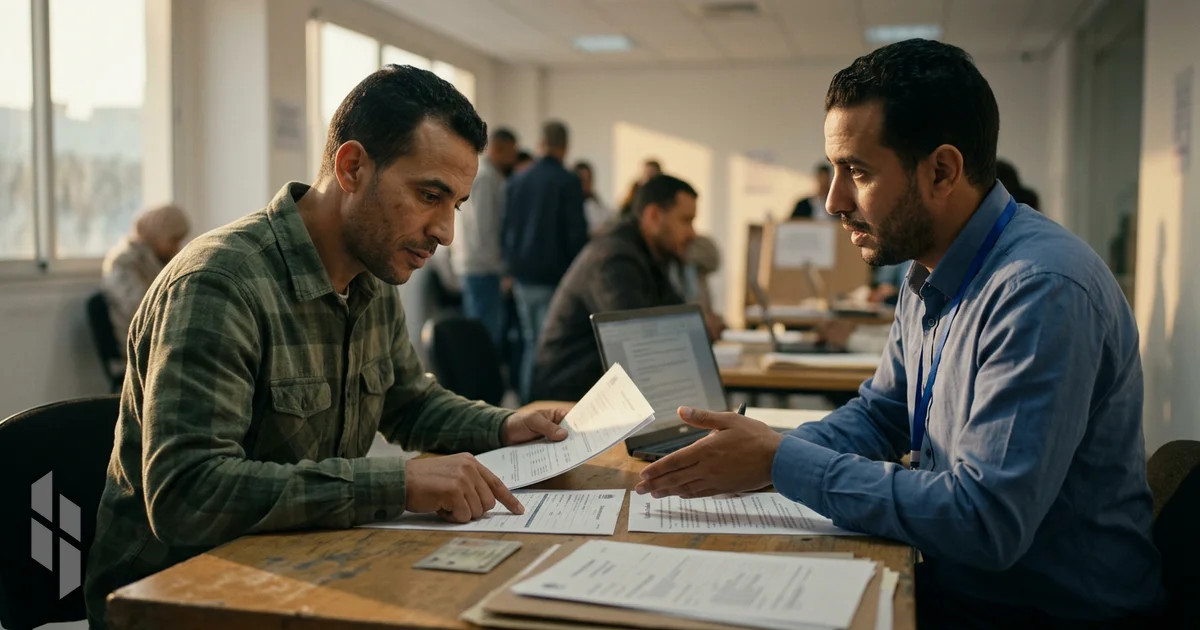
The dream of building a life in Morocco—a kingdom bridging Africa and Europe—is shared by thousands of individuals every year. However, for many, the reality of navigating the legal labyrinth of residency, work permits, and social integration can be daunting. Imagine a family that has lived in Casablanca for five years; the children speak Darija fluently and attend local schools, yet the parents live in a state of constant anxiety because their administrative status remains "irregular."
In 2026, Morocco continues to refine its humanitarian approach to migration, moving away from purely security-based policies toward a framework of integration and rights. Whether you are an undocumented migrant seeking to stabilize your status, an expat facing visa expiration, or a family looking into family reunification, understanding the current legal landscape is essential. This guide provides an exhaustive analysis of the 2026 updates regarding migrant regularization in Morocco, grounded in the latest legislative reforms and administrative practices.
Legal Foundation: The Pillars of Moroccan Migration Law
The legal architecture governing the status of foreigners in Morocco is undergoing a significant transition. While the historical foundation rests on Law No. 03-02 (relative to the entry and stay of foreigners in the Kingdom of Morocco, and to irregular emigration and immigration), the 2026 legal environment is heavily influenced by the National Strategy on Immigration and Asylum (SNIA).
Key Legislative References
To understand your rights, you must look at the specific articles that define the state's obligations and your protections:
- Law No. 03-02, Article 13: This article defines the "Registration Card" (Carte d'Immatriculation). It establishes that any foreigner over the age of 18 staying in Morocco for more than 90 days must apply for this permit. In 2026, the digitalization of this process under the "E-Filing" initiative has streamlined applications.
- The Moroccan Constitution (2011), Article 30: This is a constitutional guarantee stating that foreigners enjoy the fundamental freedoms recognized for Moroccan citizens. This article serves as the "shield" for migrants against arbitrary treatment.
- Law No. 65-99 (The Labor Code), Article 516: This governs the employment of foreign labor. It stipulates that any employer wishing to hire a foreign national must obtain authorization from the government (the "Taachir" or visa on the work contract).
- Law No. 23-98 (Prison Institutions), Article 23: As cited in recent reforms, even those in detention retain rights to professional activity, physical exercise, and study. This reflects Morocco's commitment to maintaining the "intellectual and psychological qualifications" of all residents, regardless of their legal status, to facilitate future social reintegration.
- Law No. 18-12 (Workplace Accidents): This law is critical for regularized migrants. It ensures that "detainees who perform work in prison institutions" and, by extension, all legal foreign workers, are covered by compensation schemes for accidents occurring during work.
The 2026 updates emphasize that migrant regularization is not merely a "stamp in a passport" but a gateway to the social protections found in Administrative Law in Morocco: Citizen Rights Against Government.
Practical Guide: The Regularization Process in 2026
If you are currently in an irregular situation or your visa has expired, the path to regularization in 2026 involves a multi-step administrative procedure. Unlike the mass "exceptional" campaigns of 2014 and 2017, the current system focuses on "permanent regularization" based on specific criteria.
Step 1: Determining Eligibility
To qualify for residency on humanitarian or professional grounds in 2026, applicants generally fall into one of these categories:
- Long-term residents: Foreigners who can prove continuous residence in Morocco for at least 5 years.
- Spouses of Moroccan Nationals: Facilitated through family reunification provisions.
- Foreigners with Fixed-Term Contracts (CDD/CDI): Requires a contract stamped by the Ministry of Labor.
- Individuals with Chronic Illnesses: Requiring medical care available in Morocco.
Step 2: Document Preparation
The "Dossier" is the most critical part of the process. You will typically need:
- A valid passport (or document proving identity from your embassy).
- Proof of residence (a rental agreement or "Certificat de Résidence" from the local Moqadem).
- Criminal record check (Fiche anthropométrique) from the Moroccan authorities and/or your home country.
- Medical certificate issued by a Moroccan doctor.
- Proof of means of subsistence (bank statements or a work contract).
Step 3: Submission and Timelines
In 2026, most provinces (Prefectures) require an initial appointment via the national digital portal. Once submitted, the "Récépissé" (receipt) acts as a temporary legal document.
- Timeline: Processing times currently range from 3 to 6 months.
- Costs: The administrative fee for a one-year residency card is 100 MAD, though this can vary based on the type of permit (e.g., investor vs. employee).
For those navigating these steps, it is often helpful to consult the Moroccan Citizenship & Nationality Law: Guide for Expats & Dual Nationals to understand the long-term trajectory of staying in the Kingdom.
Key Provisions Explained: Rights and Responsibilities
Regularization brings a suite of rights that many migrants are unaware of. Under the 2026 framework, the focus has shifted toward "Social Protection for All."
Access to Labor Markets and Professional Training
According to Article 23 of Law 23-98, the state emphasizes that even those within the corrective system should have access to study and professional training. For a regularized migrant, this translates to the right to enroll in OFPPT (vocational training) centers. Furthermore, Article 25 of the same law clarifies that while certain sensitive positions (like judicial clerks) are restricted, migrants are encouraged to participate in the general economy.
Social Security and Healthcare
A major update in 2026 is the integration of regularized migrants into the AMO (Assurance Maladie Obligatoire) system. Following the spirit of Law No. 03-02, once you possess a residency card, you are eligible to register with the CNSS (Caisse Nationale de Sécurité Sociale) if employed. This provides:
- Reimbursement for medical consultations.
- Access to public hospitals on the same terms as Moroccan citizens.
- Family allowances for children residing in Morocco.
Education and Family Life
Family reunification remains a cornerstone of the 2026 policy. Under the Moudawana (Family Code), foreign families have the right to live together, provided the primary breadwinner has "sufficient and stable resources." Children of migrants, regardless of the parents' status, have a guaranteed right to education in Moroccan public schools under Circular No. 13-487.
Common Mistakes & How to Avoid Them
Even with the best intentions, many applicants face rejection due to avoidable errors. Here are the most common pitfalls identified in 2026:
- Ignoring the "Visa Overstay" Period: Many believe that once they apply for regularization, their previous fines are automatically waived. This is not always the case. You must address Visa Overstay Fines & Regularization: Morocco 2026 immediately to avoid a "rejection of file" based on bad faith.
- Incomplete Proof of Residence: A simple handwritten note from a landlord is insufficient. The authorities require a legalized rental contract or a certificate of residence verified by the local police or Gendarmerie.
- Failure to Renew on Time: A residency card is not permanent. You must apply for renewal at least two months before the expiry date. In 2026, the "E-Court" and digital filing systems (Law 43-20) are increasingly used to track these deadlines.
- Working Without a Stamped Contract: Having a residency card does not automatically grant the right to work for any employer. The employer must still obtain a "Visa de Contrat de Travail" from the Ministry of Labor. Working without this can lead to the revocation of your residency status.
Conclusion: The Future of Integration in Morocco
The 2026 landscape for migrant regularization in Morocco is one of cautious optimism. The Kingdom has moved from a "transit country" mentality to a "destination country" reality. By citing laws like Law 23-98 and Law 03-02, we see a legal system that values the human dignity of the migrant, providing pathways not just for stay, but for professional growth and social security.
As Morocco prepares for major international events and continues its economic expansion, the role of regularized migrants in the labor force is more vital than ever. By following the correct legal procedures, maintaining valid documentation, and understanding your rights under the Moroccan Labor and Family Codes, you can secure a stable and prosperous future in the Kingdom.
Key Takeaways
- Residency is Mandatory: Any stay exceeding 90 days requires a "Carte d’Immatriculation" under Law 03-02.
- Digitalization is Key: Use the 2026 digital portals for appointments and tracking to avoid administrative delays.
- Social Rights: Regularization grants access to the AMO (health insurance) and public education for children.
- Work Authorization: A residency card and a work permit (Taachir) are two separate but related requirements.
- Humanitarian Protections: Moroccan law provides specific protections for migrants in vulnerable states, including those in detention or with health issues.
Frequently Asked Questions
The process typically takes between 3 to 6 months. Applicants receive a temporary receipt (récépissé) that allows them to remain legally in the country while their file is being reviewed by the Ministry of Interior.
While the residency card allows you to live in Morocco, you still need a work contract stamped by the Ministry of Labor (Taachir) to be legally employed, as per Article 516 of the Labor Code.
You may be required to pay an overstay fine. It is crucial to visit the nearest police station or 'Prefecture' to regularize your status or obtain an exit visa if you plan to leave and re-enter.
Yes, under Moroccan law and specific ministerial circulars, all children have the right to primary and secondary education in public schools regardless of their parents' legal administrative status.
The applicant must hold a valid residency card, prove they have adequate housing, and demonstrate a stable monthly income sufficient to support the family members they wish to bring to Morocco.
Yes, you can file an administrative appeal (Recours Administratif) within 60 days of the refusal. It is highly recommended to seek legal counsel to navigate the Administrative Court system.
Get weekly Moroccan legal updates 📬
Exclusive insights on Moroccan law, citizen rights, and new court decisions — delivered straight to your inbox.
No spam. Unsubscribe anytime.
Have an immigration or residency question?
Consult 9anon AI now and get accurate, instant answers about your legal situation in seconds.
Related Articles
Visa Overstay Fines & Regularization: Morocco 2026
What is the fine for overstaying your visa in Morocco? Discover the details of the 2026 regularization law for irregular migrants from the Interior Ministry. Correct your status now!
Nationality: Remote Applications (2026) Morocco
Seeking Moroccan nationality remotely? Understand e-submission timelines, proof for remote residency claims & requirements under Decree No. 03/2026. Get citizenship.
Residence Permit Renewal 2026: Step-by-Step Morocco
Struggling to renew your residence permit in Morocco? Learn the 2026 steps to avoid delays/problems. Renew successfully!