
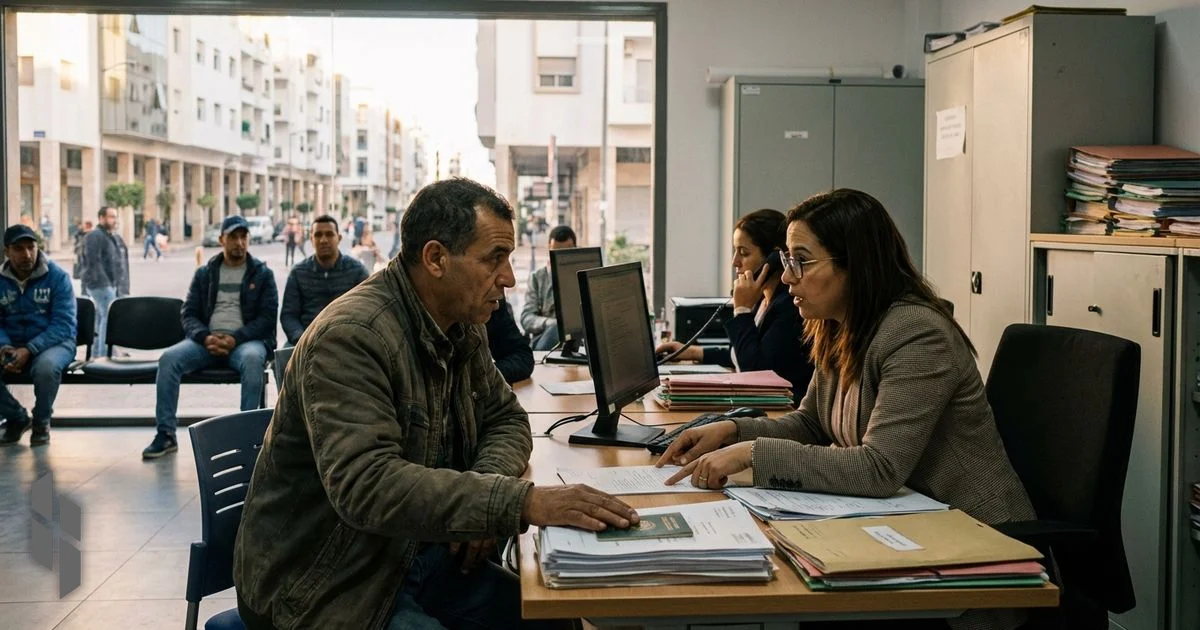
Visa Overstay Fines & Regularization: Morocco 2026
Visa Overstay Fines & Regularization: Morocco 2026
Hook Introduction: Navigating the Legal Realities of Staying in Morocco
Imagine you have fallen in love with the vibrant souks of Marrakech, the blue alleys of Chefchaouen, or the bustling tech hubs of Casablanca. Your initial 90-day stay is coming to an end, but due to a family emergency, a business opportunity, or simple oversight, you find yourself still within the Kingdom's borders on day 91. Suddenly, the status of your presence changes from a welcomed guest to an individual in violation of Law No. 02-03.
For many expatriates and tourists in 2026, the complexity of Moroccan immigration law can be daunting. What are the actual costs of overstaying? Can you simply pay a fine at the airport and leave, or will you face a courtroom appearance before a judge? More importantly, if you wish to stay longer, how can you regularize your status without being deported or banned from re-entry?
In this comprehensive guide, we will break down the legal framework governing the entry and stay of foreigners in Morocco. You will learn about the specific fines mandated by the Moroccan Penal Code and administrative regulations, the step-by-step process for regularizing your stay through the DGSN (Direction Générale de la Sûreté Nationale), and the critical timelines you must respect to avoid criminal prosecution. Whether you are a digital nomad, a retiree, or a business traveler, understanding these rules is essential for maintaining your legal standing in the Kingdom of Morocco.
Legal Foundation: The Statutes Governing Foreign Presence
The legal landscape for foreigners in Morocco is primarily anchored in Law No. 02-03, promulgated by Dahir No. 1-03-195, which relates to the entry and stay of foreigners in the Kingdom of Morocco and irregular migration. This law serves as the "constitution" for all non-citizens within the territory.
Primary Legal References
- Article 3 of Law 02-03: This article establishes the fundamental requirement for entry. Every foreigner entering Morocco must present a valid passport issued by their home state or a recognized travel document, accompanied by a visa if required by international agreements.
- Article 9 of Law 02-03: This is a critical provision for tourists. It specifies that foreigners are exempt from requesting a registration card (Carte d'Immatriculation) if their stay does not exceed 90 days. Beyond this period, the stay becomes illegal unless a formal extension or residency permit is granted.
- Article 13 of Law 02-03: This article defines the registration card as a residence permit. It can be issued for a duration ranging from one to ten years and is renewable. It also mandates that any change of residence must be reported to the authorities.
- Article 21 of Law 02-03: This provision outlines the grounds for refusal. The Moroccan administration reserves the right to deny a registration card to any foreigner whose presence constitutes a threat to public order (ordre public).
- Article 42 of Law 02-03: This is the punitive section. It stipulates that individuals who enter or leave the Moroccan territory clandestinely, or who remain beyond the authorized period without regularization, face fines ranging from 2,000 to 20,000 MAD and potential imprisonment from one to six months.
Furthermore, the Decree No. 2-09-607 provides the administrative framework for applying these laws, detailing how the Prefecture of Police and the Service des Étrangers handle applications. In 2026, these regulations have been further refined to integrate digital filing systems, though the core legal requirements remain strictly enforced.
Practical Guide: Procedures, Timelines, and Costs
If you find yourself in an overstay situation in 2026, the path to resolution depends on whether you intend to leave the country or stay and regularize your status.
Scenario A: Leaving Morocco After an Overstay
If you have exceeded your 90-day tourist stay and wish to depart, you cannot simply check in for your flight. You must follow these steps:
- Report to the Police (Service des Étrangers): Visit the police station or the immigration office at your local Prefecture.
- Court Appearance: In most cases of significant overstay, you will be directed to appear before a judge at the Tribunal de Première Instance. The judge will review your case and determine the fine.
- Payment of Fines: Fines typically range from 1,000 to 5,000 MAD for minor overstays, but can escalate significantly under Article 42. You must obtain a formal receipt of payment.
- Exit Authorization: Once the fine is paid and the court process is complete, you are usually given a window (often 48-72 hours) to leave the country.
Scenario B: Regularizing Your Stay (Applying for Residency)
If you wish to stay in Morocco legally after your initial 90 days, you must apply for a Carte d'Immatriculation. According to Article 17 of Law 02-03, different categories exist:
- Visitor Status: For those who can live on their own resources and agree not to work (Reference 7, Article 15).
- Student Status: Requires proof of enrollment and sufficient means of subsistence.
- Work Status: Requires an authorized employment contract approved by the Ministry of Labor.
Required Documents for 2026:
- A valid passport with the entry stamp.
- Criminal record check from your home country (and a Moroccan Casier Judiciaire).
- Medical certificate issued by a Moroccan doctor.
- Proof of residence (notarized lease agreement or property title).
- Proof of financial means (bank statements or business tax compliance documents if self-employed).
- Payment of the administrative fee (stamps), which is currently around 100 MAD per year of requested residency.
Timelines and Grace Periods
While there is no "official" grace period written in the law, the authorities often show leniency for overstays of 1-5 days if there is a valid reason (e.g., flight cancellation). However, once you hit the 90-day mark, the system flags your passport number. It is highly recommended to start your residency application or extension request at least 15 days before your 90 days expire.
Key Provisions Explained: Understanding Your Rights and Obligations
The Moroccan legal system distinguishes clearly between a "Registration Card" (Carte d'Immatriculation) and a "Residence Card" (Carte de Résidence).
The Registration Card (Articles 13-15)
This is the initial permit for most expats. It is usually granted for one year for the first three years of stay. As noted in Reference 1 (Article 13), this card is renewable based on the justifications provided by the foreigner. If you are a digital nomad, you might be interested in the Morocco Long-Stay Visa for Digital Nomads which aligns with these provisions.
The Residence Card (Article 16)
Under Article 16 of Law 02-03, a foreigner who has resided in Morocco continuously for at least four years in accordance with the law can apply for a "Residence Card." This card is valid for 10 years and is a significant step toward permanent residency and naturalization in Morocco.
The 15-Day Rule (Article 6)
If your application for a registration card is rejected, or if your current card is withdrawn, Reference 1 (Article 6) is very clear: you must leave the Moroccan territory within 15 days from the date of notification. Failure to do so triggers the penal provisions of the law, leading to fines and potential deportation.
Public Order and Security (Article 21)
The Moroccan state holds broad discretionary power. Even if you meet all financial and documentary requirements, a permit can be denied if the administration deems your presence a threat to public order. This is a standard principle in administrative law in Morocco, where the state's prerogative in national security is prioritized.
Common Mistakes & How to Avoid Them
Many foreigners inadvertently fall into legal traps due to misinformation. Here are the most common pitfalls encountered in 2026:
- The "Border Run" Myth: Many believe they can simply cross into Ceuta, Melilla, or fly to Spain for a day and return to reset the 90-day clock. While this worked in the past, Moroccan border authorities now track cumulative stay days within a calendar year. Frequent "border runs" can lead to a denial of entry at the border under Article 21.
- Ignoring the 15-Day Notification: If the police ask you to leave or deny your extension, do not ignore it. The 15-day window is a strict legal deadline.
- Incomplete Documentation: Submitting a residency file without a notarized lease or proper bank certification will lead to delays. In 2026, the Service des Étrangers increasingly requires digital pre-registration.
- Working on a Tourist Visa: This is a violation of Article 15. If you are caught working without a labor-approved contract, you face immediate deportation and a re-entry ban. If you are starting a company, ensure you follow the company registration guide to get the correct professional status.
- Not Reporting Address Changes: According to Article 13, you must inform the authorities if you move. Failure to do so can result in your residency permit not being renewed.
To avoid these issues, always keep a digital scan of your entry stamp and set an alert for 75 days after your arrival. If you plan to stay, visit the Prefecture in your city (Rabat, Casablanca, Marrakech, etc.) early to understand the specific local requirements, as they can vary slightly between regions.
Conclusion with Key Takeaways
Navigating the waters of Moroccan immigration law in 2026 requires diligence and respect for the statutory deadlines established by Law 02-03. While Morocco remains a welcoming destination for tourists and investors alike, the transition from a visitor to a resident is a formal legal process that cannot be bypassed. Overstaying your visa is not merely an administrative hiccup; it is a legal violation that can result in court appearances, significant financial penalties, and long-term bans on returning to the Kingdom.
By understanding the role of the DGSN, the requirements for the Carte d'Immatriculation, and the strictness of the 90-day rule, you can ensure your stay in Morocco is both enjoyable and legally secure.
Summary of Key Points:
- 90-Day Limit: Strictly enforced for tourists; stay beyond this requires a permit or extension.
- Fines: Range from 2,000 to 20,000 MAD under Article 42 for serious violations.
- Regularization: Possible through the Prefecture, requiring proof of income, health, and a clean criminal record.
- Exit Procedure: Overstayers must often see a judge and pay fines before being allowed to depart.
- Residency Path: A one-year renewable card is the standard starting point for expats.
Frequently Asked Questions
Fines typically range from 2,000 to 20,000 MAD depending on the duration of the overstay and the judge's ruling at the Tribunal de Première Instance.
Generally, no. You must first report to the police, often appear before a judge to receive a judgment, and pay the fine at the court or treasury before receiving an exit authorization.
Citizens of visa-exempt countries can stay for up to 90 days. Beyond this, you must apply for an extension or a residency permit (Carte d'Immatriculation).
Under Article 6 of Law 02-03, you are required to leave the Moroccan territory within 15 days of being notified of the rejection.
Yes, but it is difficult. You must provide a compelling reason (medical, professional, or emergency) to the Prefecture of Police well before your 90 days expire.
It can. While minor overstays usually only result in a fine, significant or repeated violations can lead to a formal deportation order and a ban from entering Morocco for several years.
Get weekly Moroccan legal updates 📬
Exclusive insights on Moroccan law, citizen rights, and new court decisions — delivered straight to your inbox.
No spam. Unsubscribe anytime.
Have an immigration or residency question?
Consult 9anon AI now and get accurate, instant answers about your legal situation in seconds.
Related Articles
Unlicensed Building: Can It Be Regularized in Morocco 2026?
Did you build your home without a permit? Discover how to regularize illegal construction in Morocco in 2026. Learn the conditions and procedures.
Residency Permits: Law 02-03 Updates in Morocco (2026)
Struggling with your Moroccan residency permit under Law 02-03? See the latest updates on application and renewals for 2026. Your step-by-step guide!
Visa Extension for Migrants: Guide 2026
Need to extend your visa in Morocco? Learn the requirements for visa extensions and appeal options if denied. Complete guide to regularization!