
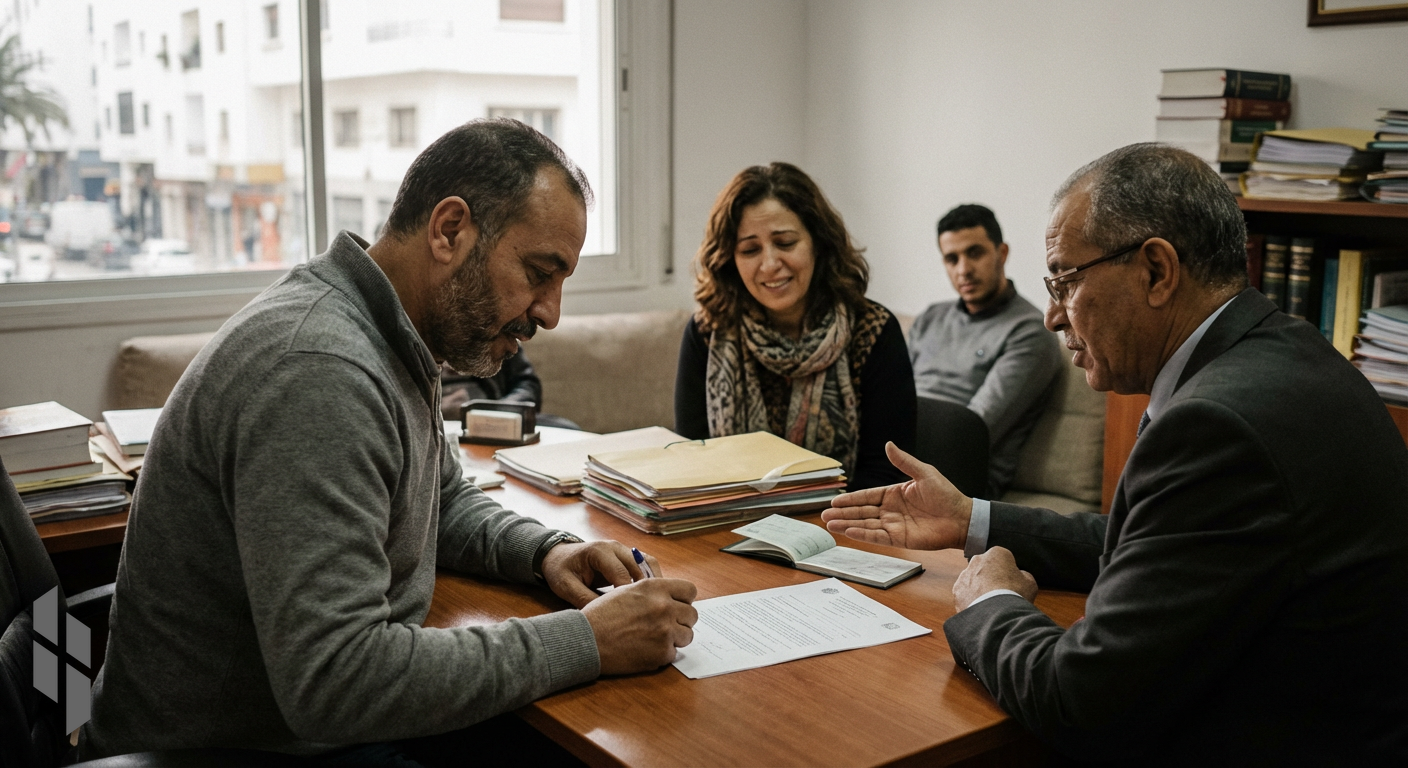
Unpaid Checks and Family Exemptions: New Legal Amendments in Morocco
Unpaid Checks and Family Exemptions: New Legal Amendments in Morocco
The use of checks remains a fundamental pillar of commercial and personal transactions in Morocco. However, the legal consequences of issuing a check without sufficient provision can be severe, involving both financial penalties and criminal liability. In recent years, the Moroccan legislature has introduced several amendments to the Commercial Code and related financial laws to balance the necessity of maintaining the check's credibility as a payment instrument with the socio-economic realities of citizens.
Understanding these regulations is essential for business owners and individuals alike. Recent legislative updates, including provisions in the 2026 Finance Law and amendments to the Commercial Code, have refined how the state handles unpaid checks, electronic transactions, and the legal definitions of parties involved in these disputes.
The Legal Framework for Unpaid Checks in the Commercial Code
Under the Moroccan Commercial Code (Code de Commerce), a check is an instrument of payment that must be backed by available funds at the moment of issuance. When a check is returned unpaid due to a lack of provision, the issuer faces an "interdiction" or a ban from issuing checks for a specific period.
According to recent updates in the Commercial Code, judicial authorities have the power to order the confiscation and destruction of forged or fraudulent checks. Furthermore, the law stipulates that the machinery and tools used to produce such fraudulent instruments shall be confiscated by court order, unless it is proven that they were used without the owner's knowledge.
A critical provision allows the court to prohibit a convicted individual from issuing any checks—other than those allowing for a limited withdrawal of funds—for a duration ranging from one to five years. This measure serves as both a penalty and a preventative tool to protect the financial system from repeat offenders.
Settlement Procedures and Financial Penalties
To encourage the regularisation of unpaid checks, Morocco has implemented exceptional measures regarding the payment of financial fines. These fines are required to restore the individual's right to issue checks.
Historical context is vital here: Decree-Law No. 2.20.690, issued in September 2020, established exceptional provisions for these fines. These measures were extended starting from April 1, 2021, and remained tied to the duration of the state of health emergency. The goal was to provide a path for debtors to settle their situations without facing immediate and permanent exclusion from the banking system.
Settlement typically involves:
- Providing the full amount of the check to the bank or proving payment to the beneficiary.
- Paying a specific fine to the Public Treasury.
- Notifying the Bank Al-Maghrib (the central bank) to lift the interdiction.
Digital Transformation and Legal Definitions
As Morocco moves toward a digital economy, the legal framework is shifting to accommodate electronic transactions. Law No. 43.20 regarding trust services for electronic transactions and Law No. 53.05 regarding the electronic exchange of legal data have significantly modified the Dahir of Obligations and Contracts (DOC).
Specifically, Article 2.1 of the DOC has been amended to recognize electronic signatures and data exchanges as having the same legal weight as traditional paper documents, provided they meet specific security criteria. This shift impacts how "proof of payment" or "settlement agreements" are handled in court, as electronic communications are now increasingly accepted as legal evidence.
Furthermore, the 2026 Finance Law introduces a significant linguistic and legal shift in Moroccan legislation. The term "Moral Persons" (الأشخاص المعنويين) is being replaced by "Legal Persons" (الأشخاص الاعتباريين), and "Natural Persons" (الأشخاص الطبيعيين) is replaced by "Physical Persons" (الأشخاص الذاتيين). While these seem like minor terminology changes, they align Moroccan law with modern international standards and clarify the status of entities in tax and commercial disputes.
Real-World Applications and Corporate Context
The law also distinguishes between different types of business entities when dealing with financial liabilities. Law No. 5.96, which governs various types of companies such as Limited Liability Companies (SARL) and Partnerships (Société en Nom Collectif), was updated as recently as August 2024.
For instance:
- Article 71 and 85 Amendments: Recent laws (Law No. 44.24 and Law No. 45.24) have supplemented these articles to provide clearer guidelines on corporate governance and financial responsibility.
- The 2026 Finance Law: This law specifies that new tax control procedures and provisions regarding the transfer of "Business Assets" (Fonds de commerce) will apply to operations conducted after January 1, 2026. This is particularly relevant for those looking to settle unpaid checks by selling business assets or restructuring their companies.
Conclusion and Key Takeaways
The Moroccan legal landscape regarding checks and financial transactions is becoming more sophisticated. The integration of electronic trust services and the periodic adjustment of fines demonstrate a desire to modernize the economy while maintaining strict discipline regarding payment instruments.
Key Takeaways:
- Judicial Bans: Courts can ban individuals from issuing checks for up to 5 years for serious violations.
- Path to Settlement: There are specific legal windows and reduced fine structures that allow individuals to regain their banking rights.
- Electronic Evidence: Electronic exchanges are now legally recognized under the amended Dahir of Obligations and Contracts.
- Terminology Updates: Be aware of the shift from "Natural/Moral persons" to "Physical/Legal persons" in all legal and tax filings starting in 2026.
Staying compliant with the Commercial Code and monitoring the annual Finance Laws is the best way to navigate financial obligations and avoid the heavy penalties associated with unpaid checks in Morocco.
Get weekly Moroccan legal updates 📬
Exclusive insights on Moroccan law, citizen rights, and new court decisions — delivered straight to your inbox.
No spam. Unsubscribe anytime.
Have More Legal Questions?
Consult 9anon AI now and get accurate, instant answers about your legal situation in seconds.
Related Articles
Check Offences Reform: 2% Settlement Fine 2026
The essential guide to Morocco's 2026 check law reform: understand the 2% settlement fine, new penalties, and family exceptions.
Law 03.23 Criminal Procedure: Cybercrime Impact 2026
Understand the new changes in Law 03.23 of the Criminal Procedure Code and its impact on cybercrime in Morocco. A comprehensive 2026 guide.
Real Estate & Family for MREs: Digitization 2026
Your guide as an MRE to obtaining online administrative and real estate documents, including building permits and custody papers in 2026.