
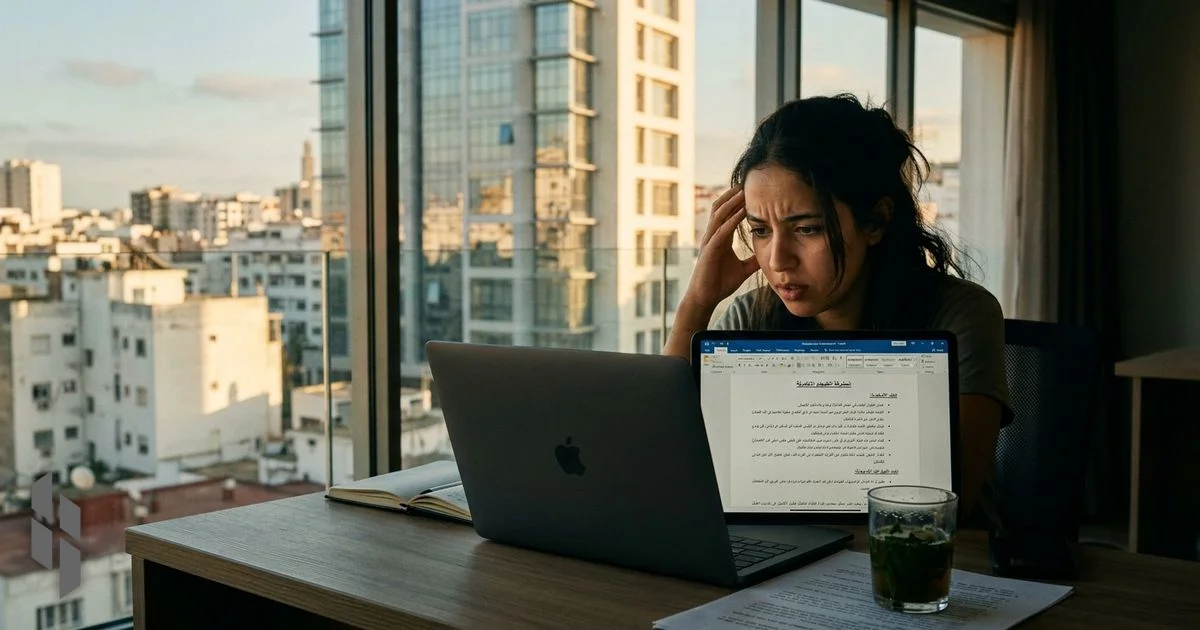
Remote Work: Employee Rights (2026) Morocco
Remote Work: Employee Rights (2026) Morocco
Hook Introduction: The New Frontier of Moroccan Labor
Imagine you are a software developer based in Casablanca, but your company’s headquarters are in Tangier. For the past two years, you have worked entirely from your home office. One Monday morning, your employer sends an email stating that starting next week, all remote arrangements are cancelled, and you must report to the office daily or face termination for "abandonment of post." Alternatively, consider a scenario where you trip over a power cable in your home office during work hours—is this considered a workplace accident under Moroccan law?
As we move through 2026, the traditional boundaries of the Moroccan workplace have permanently shifted. While the Morocco Labor Code (Law 65.99) was originally drafted in an era of physical factories and brick-and-mortar offices, recent legislative updates and judicial interpretations have created a robust framework for remote work. Transitioning to a "télétravail" model is no longer a legal grey area; it is a regulated professional arrangement with specific protections for both parties.
In this comprehensive guide, you will learn about your fundamental rights as a remote employee in Morocco, the mandatory clauses that must appear in your contract, how the "Right to Disconnect" is enforced in 2026, and the specific procedures for handling workplace accidents occurring outside the employer's premises. Whether you are a digital nomad, a local remote worker, or an HR manager, understanding these regulations is essential for legal compliance and professional security.
Legal Foundation: The Statutory Framework of Remote Work
Remote work in Morocco is governed by a combination of the primary Labor Code, specific implementation decrees, and recent reforms aimed at modernizing the digital economy. To understand your rights, you must look at the following key legal pillars:
1. Law No. 65.99 (The Labor Code)
The Labor Code remains the "Constitution" of employment in Morocco. Even when working from home, you are protected by:
- Article 6: Defines the "employee" (ajir) as any person who has committed to providing their professional activity under the direction of one or more employers in return for a salary. This definition is technology-neutral, meaning your physical location does not strip you of your status as an employee.
- Article 8: Establishes the elements of the employment contract. For remote workers, the "subordination link" (the employer's right to give orders and monitor work) is maintained through digital means.
- Article 9: Prohibits all forms of discrimination. Remote workers must receive the same benefits, promotions, and training opportunities as their on-site counterparts.
2. The 2026 Digital Labor Reforms
In response to the evolving economy, the Moroccan government has integrated new provisions regarding the "Right to Disconnect" and "Reversibility." These reforms clarify that remote work is a modality of performing work, not a change in the legal nature of the employment relationship.
3. Law No. 18-12 (Workplace Accidents)
As cited in [Reference 5], Article 3 of Law 18-12 defines a workplace accident as any accident, regardless of the cause, resulting in harm to an employee occurring "by occasion or because of the work." Crucially, Article 4 extends this to the commute between the place of work and the residence. For remote workers, the "place of work" is legally defined as the designated home office or co-working space mentioned in the contract.
4. Data Protection and Privacy (Law 09-08)
Remote work involves heavy use of surveillance and data processing. The CNDP (National Commission for the Protection of Personal Data) regulates how employers can monitor remote workers. Employers cannot use webcams for constant surveillance or keyloggers without meeting strict proportionality and notification requirements.
Practical Guide: Setting Up a Legal Remote Arrangement
Transitioning to remote work in Morocco requires more than just a laptop and an internet connection. To ensure full legal protection in 2026, follow these steps:
Step 1: The Written Amendment (Avenant)
Under Article 15 of Law 65.99, while a verbal contract is technically valid, a written contract is highly recommended. For remote work, a written amendment to the original contract is mandatory to define the new terms. This document must include:
- The specific location of work (to determine insurance coverage).
- The technical equipment provided by the employer.
- The hours of "reachability" (availability).
- The conditions for returning to the office (Reversibility).
Step 2: Equipment and Cost Coverage
Moroccan law implies that the employer must provide the "tools of the trade." In a remote context, this includes:
- Hardware: Laptop, monitor, and ergonomic chair.
- Allowances: A "Telework Prime" to cover a portion of electricity, high-speed internet, and home insurance increments.
- Maintenance: The employer is responsible for the technical support and repair of the equipment provided.
Step 3: Occupational Health and Safety
According to [Reference 2], Article 315 and 316 of Law 65.99 require the employer to ensure the health and safety of the worker. In a remote setup:
- The employer (or the Occupational Doctor) has the right to request a photo or a self-certification of the workspace's ergonomics.
- The employee must provide a "Certificate of Conformity" for their electrical installation to the employer's insurance company.
Step 4: Foreigner Work Permits (CTE)
If you are a foreign national working remotely for a Moroccan company, you must comply with Article 516 of the Labor Code. As noted in [Reference 4], the Ministry of Labor provides a specific model for foreign contracts. You must obtain a CTE (Contrat de Travail d'Etranger) stamped by the Ministry, even if you never step foot in a physical office. Failure to do so renders the contract void and puts the employee at risk of deportation.
Key Provisions Explained: Your Rights in Detail
Understanding the "fine print" of the Moroccan Labor Code is essential for defending your rights.
The Right to Disconnect (Droit à la Déconnexion)
By 2026, the right to disconnect has become a central pillar of Moroccan labor law. Under the spirit of Article 184 (which limits working hours to 44 hours per week in non-agricultural sectors), an employer cannot penalize a remote worker for not answering emails or messages outside of official working hours.
- Practical Example: If your contract specifies hours from 9:00 AM to 6:00 PM, your employer cannot initiate disciplinary action under Article 61 for a failure to respond to a WhatsApp message at 9:00 PM.
Equal Treatment and Career Progression
Article 9 of the Labor Code is strictly enforced for remote workers. You have the same right to:
- CNSS (Social Security): Contributions must be paid based on your full salary.
- Paid Leave: You are entitled to 1.5 days of leave per month of service (Article 231).
- Training: You must be included in the company’s annual training plan.
Reversibility of Remote Work
Unless the job was advertised as "100% Remote" from the start, remote work is generally considered reversible. However, the employer must provide a notice period (usually 1 to 3 months) before requiring a return to the office. A sudden demand to return without a valid reason or notice can be interpreted as a "substantial change to the contract," allowing the employee to claim constructive dismissal under Article 40, entitling them to severance pay.
Workplace Accidents in the Home
As per [Reference 5], the burden of proof is often on the employee to show the accident happened during work hours.
- Scenario: If you burn yourself while making coffee at 10:30 AM (during a standard break), this is generally covered as a workplace accident because it occurred during the "time and place" of work.
- Procedure: You must notify your employer within 48 hours, and they must file a declaration with their insurance provider and the local authority.
Common Mistakes & How to Avoid Them
Many employees and employers fall into legal traps when managing remote work in Morocco. Here is how to avoid them:
1. Neglecting the "Workplace Location" Clause
The Mistake: Working from a café or a different city without notifying the employer. The Risk: If an accident occurs in a location not specified in the contract or the insurance policy, the insurer may refuse coverage under Law 18-12. The Solution: Always update your employer in writing if you change your primary remote work location.
2. Overlooking Data Privacy (CNDP)
The Mistake: Using personal computers for company work without security protocols. The Risk: Under the Moroccan Data Protection Law (09-08), the employee could be held liable for data breaches if they bypassed company security measures. The Solution: Use only employer-provided VPNs and hardware, and ensure you have signed a confidentiality agreement.
3. Ignoring the Foreigner Contract Stamping
The Mistake: Foreigners working on a standard "local" contract without Ministry approval. The Risk: As per Article 516, the contract is legally non-existent without the Ministry’s "Visa." The employee loses all rights to sue in Moroccan labor courts. The Solution: Ensure your employer follows the procedure in [Reference 4] for the Contrat de Travail d'Etranger.
4. Failing to Document Overtime
The Mistake: Working 10 hours a day because "the work is never finished" at home. The Risk: Without a digital time-tracking system, it is nearly impossible to claim overtime pay under Article 196. The Solution: Keep a daily log of login/logout times and send weekly summaries to your supervisor to create a "paper trail."
Conclusion with Key Takeaways
Remote work in Morocco has matured into a sophisticated legal arrangement. The Labor Code (Law 65.99) provides a strong foundation, ensuring that working from home does not mean working without protection. By 2026, the emphasis has shifted toward digital well-being, data security, and the formalization of remote work through written amendments.
Whether you are negotiating a new remote role or seeking to formalize an existing one, remember that your rights to social security, fair pay, and a safe working environment remain unchanged regardless of your GPS coordinates.
Summary of Key Takeaways:
- Legal Parity: Remote workers have the exact same rights as office workers under Article 9 of the Labor Code.
- Written Proof: Always sign an amendment (avenant) specifying the work location, equipment, and hours to ensure insurance and legal coverage.
- Right to Disconnect: You are not legally obligated to respond to work communications outside of the hours defined in your contract.
- Accident Coverage: Home-based accidents during work hours are covered under Law 18-12, provided the home office is the registered place of work.
- Foreigner Compliance: Non-Moroccan citizens must have their contracts authorized by the Ministry of Labor to be enforceable.
For more information on related topics, you may find our guides on Employee Rights in Morocco and Data Protection Law helpful for understanding the broader legal landscape.
Related Search Terms
9anoun ai, 9anon ai, kanon ai, kanoun ai, qanon ai, qanoun ai
Frequently Asked Questions
Yes, remote work is legal and governed by the Labor Code (Law 65.99). While the code does not have a standalone 'Remote Work Law,' it treats telework as a modality of employment where all standard rights and protections apply.
Generally, yes, through the principle of 'reversibility.' However, the employer must respect a reasonable notice period and cannot use the return-to-office order as a disguised way to force a resignation.
Under Moroccan legal principles, the employer should bear the costs necessary for the performance of work. Most 2026 contracts include a monthly 'telework allowance' to cover these expenses.
It is treated as a workplace accident under Law 18-12. You must report it to your employer within 48 hours and provide medical certificates to trigger the insurance compensation process.
No, constant webcam monitoring is generally considered a violation of privacy under Law 09-08 and CNDP regulations. Monitoring must be proportionate, justified by security needs, and the employee must be informed in advance.
Only if they are employed by a Moroccan entity. If a digital nomad works for a foreign company while living in Morocco, they are usually governed by the law of the country where the company is based, though they must still respect Moroccan immigration and tax laws.
Get weekly Moroccan legal updates 📬
Exclusive insights on Moroccan law, citizen rights, and new court decisions — delivered straight to your inbox.
No spam. Unsubscribe anytime.
Have a question about labor law?
Consult 9anon AI now and get accurate, instant answers about your legal situation in seconds.
Related Articles
Remote Work Contracts: Labor Code Updates 2026 Morocco
Need a remote work contract? Learn the essential clauses and conditions in 2026. Understand worker rights and digital nomad compliance.
Remote Work Law Morocco 2026: Your Full Rights
Working remotely in Morocco? Know your rights under the 2026 labor code. Discover required reimbursements and data security to protect your rights!
Labor Disputes: Lawyer Representation 2026 (Morocco)
Need a lawyer in a labor dispute? Learn your rights to legal representation in labor cases in Morocco in 2026 & how the suspended lawyers' bill could affect it.