
Child Custody: Relocating Abroad with a Child in 2026
Child Custody: Relocating Abroad with a Child in 2026
Introduction: The Complexity of International Relocation
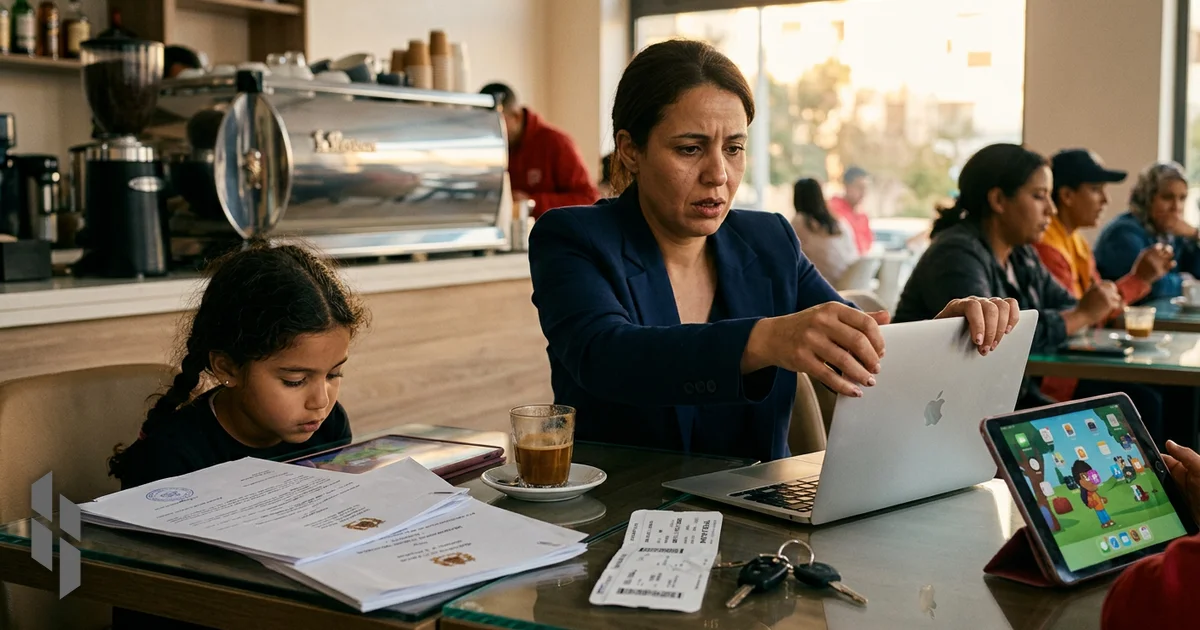
Imagine you have recently finalised a divorce in Casablanca. You have been granted physical custody of your seven-year-old daughter, and life is beginning to settle into a new rhythm. Suddenly, you receive a career-defining job offer in London or Dubai. It is an opportunity for a better life, superior schooling for your child, and financial stability. However, the child’s father still lives in Morocco and exercises his visitation rights every weekend. Can you simply pack your bags and move?
In 2026, the world is more interconnected than ever, yet the legal boundaries governing child relocation remain strict and deeply rooted in the protection of the child’s stability. Under Moroccan law, specifically the Moudawana (Family Code), the act of moving a child across international borders is not merely a logistical challenge; it is a significant legal undertaking that involves the intersection of custody rights (Hadana) and legal guardianship (Wilaya).
Navigating these waters requires a precise understanding of how Moroccan courts balance the "best interests of the child" against the rights of the non-custodial parent to maintain a relationship with their offspring. This article provides a comprehensive guide to the legal framework, the necessary procedures, and the judicial hurdles you must overcome to legally relocate abroad with a child in 2026. You will learn the difference between temporary travel and permanent relocation, the role of the Public Prosecutor, and how to obtain court authorisation when the other parent refuses to cooperate.
Legal Foundation: The Moudawana and the Hierarchy of Rights
The primary legislation governing child custody and relocation in Morocco is Law No. 70-03, commonly known as the Moudawana or the Family Code. To understand relocation, one must first understand the two distinct pillars of parental authority in Morocco: Hadana (Custody) and Wilaya (Guardianship).
1. Custody (Hadana) – Article 163
Under Article 163 of the Moudawana, custody is defined as the protection of the child, ensuring their upbringing and interests in their daily life. While the law prioritises the mother for custody, followed by the father and then the maternal grandmother, this right is not absolute. It is a functional responsibility to provide a stable home environment.
2. Legal Guardianship (Wilaya) – Article 236
Crucially, even if a mother has physical custody, Article 236 of the Moudawana designates the father as the legal guardian (Wali) of the child. As the guardian, the father has the legal authority to make major life decisions, including those regarding the child's education, health, and, most importantly, their place of residence and travel.
3. Restrictions on Relocation – Article 178 and 179
The law is very specific about moving the child away from the non-custodial parent. Article 178 stipulates that the person in charge of custody cannot move the child outside the place of their residence without the consent of the legal guardian, unless there is a valid reason and the move does not harm the child's interests.
Furthermore, Article 179 provides that the court may take measures to ensure that the non-custodial parent can continue to exercise their visitation rights. If a move makes visitation impossible or excessively difficult, the court may actually transfer custody to the other parent to preserve the child's bond with both family branches.
4. Administrative Oversight – Law No. 40.04
While the Moudawana handles the family dynamics, Law No. 40.04 (the Statute for Private Nurseries) and its associated decrees, such as Decree No. 2.08.678, highlight the state's interest in the child's educational and health environment. When relocating, courts often look at whether the new destination provides an environment that meets or exceeds the standards set for child welfare and education within Morocco.
Practical Guide: Steps to Lawful Relocation in 2026
Relocating a child is a multi-step process. In 2026, Moroccan courts have digitised many aspects of this through the mahakim.ma guide 2026 system, but the legal requirements remain rigorous.
Step 1: Attempt to Obtain Written Consent
The simplest path is a notarised agreement between both parents. This document should state:
- The destination country and city.
- The reason for the move (e.g., employment, remarriage).
- A detailed visitation schedule (e.g., the child returns to Morocco for summer and winter breaks).
- Agreement on who bears the travel costs.
Step 2: Filing for Judicial Authorisation
If the legal guardian (usually the father) refuses to grant permission for the child to travel or relocate, the custodial parent must file a petition with the Judge of Urgent Matters (Juge des Référés) at the Court of First Instance.
Required Documents for the Petition:
- A certified copy of the divorce decree and the custody judgment.
- Proof of the "valid reason" for relocation (e.g., an employment contract abroad, admission letters for the child in a foreign school).
- Evidence of suitable housing in the destination country.
- A proposed plan for how the non-custodial parent will maintain contact (Skype/Zoom schedules and holiday visits).
Step 3: The Role of the Public Prosecutor
In cases involving children, the Public Prosecutor (Ministère Public) acts as a party to the proceedings to ensure the child's rights are protected. They will review the file and provide an opinion to the judge.
Step 4: Obtaining the Travel Authorization Order
If the judge is satisfied that the move is in the child's best interest and that the custodial parent is not simply trying to "sever the bond" with the father, they will issue a court order. This order serves as a substitute for the father's consent at border control and for passport applications.
Timelines and Costs
- Court Proceedings: Urgent petitions can take between 15 to 45 days.
- Bailiff Fees: You will need a judicial officer to notify the other parent of the court's decision. For more on these costs, see our guide on Morocco huissier fees 2026.
- Legal Fees: Vary based on the complexity of the case and whether it is contested.
Key Provisions Explained: Balancing Stability and Mobility
To successfully navigate a relocation case in 2026, you must understand the specific legal "tests" the Moroccan judge will apply.
The "Best Interests" Standard
Moroccan jurisprudence has evolved to move away from rigid rules toward a more flexible "best interests" analysis. The judge will ask: Will the child be better off in the new country? This includes evaluating the quality of education, healthcare, and the presence of an extended family support network.
The Risk of Losing Custody (Article 175)
A major risk for the relocating parent is Article 175. If a mother who has custody remarries, she may lose custody unless the child is under seven years old, or if the new husband is a relative of the child within the prohibited degrees of marriage. When relocation is combined with remarriage, the legal complexity doubles, as the father can argue that the "change in circumstances" warrants a transfer of custody to him.
Visitation Guarantees
The court will rarely allow a permanent move without a "guaranteed" visitation plan. In 2026, judges often require the custodial parent to sign a formal undertaking or even post a financial bond to ensure they will bring the child back to Morocco for scheduled visits. If the custodial parent fails to do so, they may face criminal charges for "child abduction" or "non-representation of a child" under the Moroccan Penal Code.
The Impact of International Conventions
While Morocco is a signatory to certain international treaties, it often relies on bilateral agreements with specific countries (like France or Spain) regarding the civil aspects of international child abduction. If you are moving to a country without such an agreement, the Moroccan court will be much more hesitant to allow the relocation, fearing the child will never return.
Common Mistakes & How to Avoid Them
Relocating without following the proper legal channels can have disastrous consequences, ranging from the loss of custody to criminal prosecution.
1. Moving Without a Court Order or Written Consent Many parents believe that having a divorce by mutual consent gives them total freedom. This is false. Even with a mutual consent decree, if the father is the guardian, his specific permission for international travel is required at the airport. Attempting to leave without this can lead to being stopped at the border by the Royal Gendarmerie or Police.
2. Failing to Provide Evidence of the "New Life" Vague claims like "I want a better future" are insufficient. You must provide concrete evidence. If you are moving for a job, provide the contract. If you are moving for a spouse, provide the marriage certificate and their proof of income. The court needs to see a "settled" plan, not a "speculative" one.
3. Ignoring the Non-Custodial Parent’s Rights Do not try to "hide" the move. Moroccan judges react very poorly to parents who attempt to alienate the child from the other parent. Always present a plan that encourages the relationship between the child and the parent staying in Morocco.
4. Not Updating the Civil Status Records After obtaining a relocation order, ensure it is properly registered and that you have an "executive copy" (la grosse). Without the formal enforcement of the custody judgment, you may face administrative hurdles at Moroccan consulates abroad when trying to renew the child's passport or national ID (CNIE).
Conclusion: Securing Your Child's Future
Relocating abroad with a child from Morocco in 2026 is a journey that requires patience, transparency, and strict adherence to the Moudawana. While the law protects the father's role as legal guardian, it also recognizes the custodial parent's right to seek a better life, provided the child's welfare remains the primary focus.
By understanding the hierarchy of Hadana and Wilaya, preparing a robust evidentiary file, and respecting the visitation rights of the non-custodial parent, you can successfully navigate the Moroccan legal system. Whether you are moving for career, family, or personal growth, the key is to act legally and proactively to ensure your child's transition is as smooth as possible.
Key Takeaways
- Guardianship vs. Custody: In Morocco, the mother usually has custody (Hadana), but the father remains the legal guardian (Wilaya) and must consent to travel.
- Judicial Intervention: If the father refuses consent, the mother must obtain a court order from the Judge of Urgent Matters by proving a valid reason for the move.
- Best Interests: The court's decision is always based on the child's educational, health, and psychological well-being in the destination country.
- Visitation is Sacred: Any relocation plan must include a clear, enforceable schedule for the non-custodial parent to see the child.
- Legal Risks: Moving a child without consent or a court order can lead to the loss of custody and potential criminal charges under the Penal Code.
Frequently Asked Questions
Even with full physical custody (Hadana), you generally need the consent of the legal guardian (usually the father) to take the child out of Morocco. If he refuses, you must apply for a judicial travel authorization from the court.
This can be considered child abduction under Moroccan law. The father can file for an immediate transfer of custody to himself and may initiate criminal proceedings against you for 'non-representation of a child'.
Valid reasons include a significant career opportunity with a signed contract, remarriage to a spouse living abroad, or the child's need for specialized medical treatment or education not available in Morocco.
Under Article 175 of the Moudawana, remarriage can lead to the loss of custody unless the child is very young, the new husband is a close relative of the child, or the move is deemed essential for the child's welfare.
A petition for urgent travel or relocation authorization typically takes between 15 to 45 days, depending on the court's schedule and whether the other parent contests the application.
Yes, as the legal guardian, the father's signature is usually required for passport issuance or renewal. If he refuses, you must obtain a court order to bypass his signature at the administrative level.
Get weekly Moroccan legal updates 📬
Exclusive insights on Moroccan law, citizen rights, and new court decisions — delivered straight to your inbox.
No spam. Unsubscribe anytime.
Have a question about family law?
Consult 9anon AI now and get accurate, instant answers about your legal situation in seconds.
Related Articles
Divorce in Morocco: A Complete Legal Guide on Procedures & Rights (2026)
Consensual divorce, Tatliq, or Talaq — learn every step of the Moroccan divorce procedure, custody rules, and financial obligations under the Moudawana.
Cybercrime Penalties: Morocco Social Media Guide 2026
Do you know the cybercrime penalties in Morocco? Learn about the 2026 penal code amendments and fines for online offenses. Avoid legal troubles now!
How to Change Your Name in Morocco 2026: Full Guide
Need to change your name in Morocco? Learn the 2026 legal procedures, including online applications and required documents. Start your name change now!