
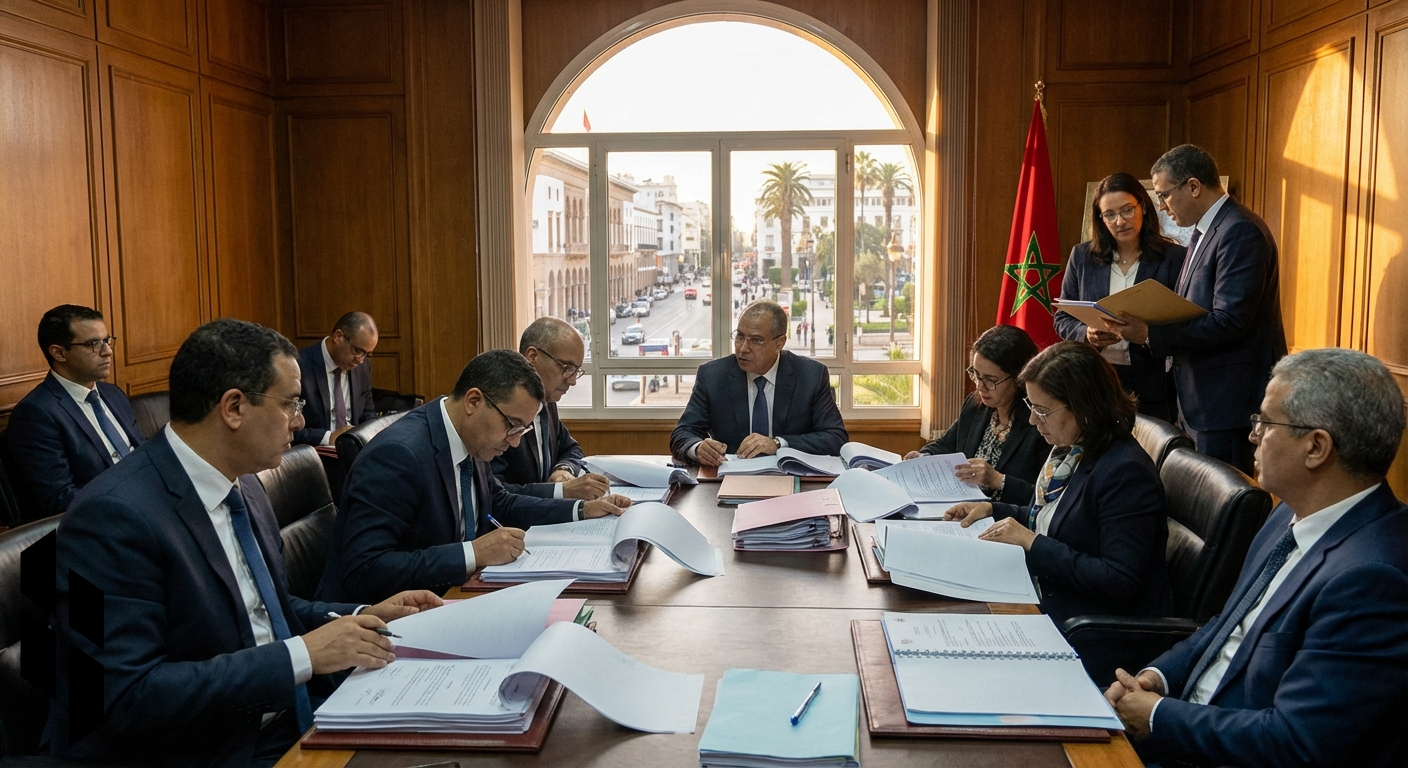
Moroccan Law on Public Service Reform
Moroccan Law on Public Service Reform
The landscape of public services in Morocco is undergoing a significant transformation. Guided by the principles of modernization, accessibility, and digital sovereignty, the Moroccan legal framework has evolved to redefine how the state and private operators interact with citizens. Whether it is through telecommunications, audiovisual media, or administrative efficiency, the core objective of "الإصلاح" (reform) remains centered on the concept of the "Public Service" (المرفق العام).
This article explores the legal foundations of public service obligations in Morocco, focusing on how recent laws and decrees ensure that essential services are provided fairly, continuously, and at a high standard of quality across the Kingdom.
The Pillars of Public Service: Continuity and Equality
The Moroccan legal system establishes several fundamental principles for any entity tasked with a public service mission. These principles are not merely theoretical; they are codified in specific agreements such as the "Cahier des Charges" (Book of Specifications) for major operators.
According to Decree No. 2.97.1026 and the specific terms approved for Ittisalat Al-Maghrib (Maroc Telecom), public service providers are bound by three major obligations:
- Continuity (ديمومة الخدمة): Services must be provided without interruption. For instance, in the telecommunications sector, operators must ensure that networks remain operational 24 hours a day. Exceptions are only permitted under legally proven "force majeure" or with prior authorization from the National Telecommunications Regulatory Agency (ANRT).
- Equality and Universality: Article 3 of the Ittisalat Al-Maghrib Book of Specifications mandates that the operator must provide telephone services across the entire national territory. This must be done on a continuous and regular basis, ensuring "equality in treatment and access at a reasonable price for all beneficiaries."
- Adaptability: Public services must constantly evolve to meet the "new requirements" of the population, ensuring that the administration (الإدارة العامة) stays relevant in a changing technological world.
Telecommunications as a Strategic Public Service
One of the most robust examples of public service reform in Morocco is the telecommunications sector. Under Law No. 24.96, the concept of the "Universal Service" (الخدمة الأساسية) was introduced. This ensures that even residents in remote rural areas have access to essential communication tools.
Practical applications of this reform include:
- Rural Development: According to Article 18-1 of the telecommunications decree, operators contribute to the "territorial preparation" (إعداد التراب الوطني). Costs incurred from serving rural or suburban areas can be deducted from the operator's mandatory contributions, incentivizing the expansion of infrastructure to underserved regions.
- Mandatory Services: Beyond standard mobile and internet plans, operators are legally required to maintain "Mandatory Services" (الخدمات الإجبارية), such as telegraph services (including the delivery of telegrams) and maritime radio communications, which are vital for national safety and administration.
- Quality Standards: New licenses, such as those granted for GMPCS (Global Mobile Personal Communications by Satellite), emphasize that operators must deploy all necessary human and technical resources to mitigate the consequences of equipment failure or destruction.
Digital Reform and Fiscal Residency
As part of the broader reform (الإصلاح) of the administration, Morocco is also updating its fiscal laws to reflect the digital nature of modern public services. The Finance Law of 2025 introduces specific indicators to determine when a digital service is considered "consumed" in Morocco for tax purposes.
Under Article 23-II, a customer is deemed to have a tax residence in Morocco if any of the following indicators are met:
- The customer provides a Moroccan billing address.
- The payment is made via a credit card issued by a Moroccan financial institution.
- The service is accessed via a Moroccan IP (Internet Protocol) address.
- The customer uses the international dialing code for Morocco (+212).
This legal shift ensures that the digital economy contributes to the national budget, which in turn funds the maintenance and expansion of public services.
Audiovisual Media and National Identity
Public service reform also extends to the media. The "Cahier des Charges" for Soread-2M (the national second channel) highlights the social dimension of public service. The law mandates that the company must:
- Broadcast programs across the entire national territory to reach the widest possible audience.
- Encourage "regional expression" (التعبير الجهوي) through central stations located throughout the Kingdom.
- Contribute to the promotion of Moroccan culture and civilization both domestically and for Moroccans living abroad.
These obligations demonstrate that "Public Service" in Morocco is not just about logistics or technology; it is also about preserving national identity and ensuring that every citizen, regardless of their location, feels connected to the national discourse.
Conclusion and Key Takeaways
The reform of public services in Morocco is a multi-faceted legal endeavor. By moving from a centralized administrative model to a regulated, high-quality service model, Morocco is positioning itself as a leader in regional governance.
Key Takeaways:
- Universal Access: Laws ensure that essential services like telecommunications must be accessible even in rural areas at reasonable prices.
- Regulatory Oversight: Institutions like the ANRT play a crucial role in monitoring service quality and ensuring continuity.
- Modernization: Recent laws, including the 2025 Finance Law, adapt the legal framework to account for digital services and global connectivity.
- Social Responsibility: Public service providers in media and tech are legally bound to contribute to territorial development and national culture.
Get weekly Moroccan legal updates 📬
Exclusive insights on Moroccan law, citizen rights, and new court decisions — delivered straight to your inbox.
No spam. Unsubscribe anytime.
Have More Legal Questions?
Consult 9anon AI now and get accurate, instant answers about your legal situation in seconds.
Related Articles
Check Offences Reform: 2% Settlement Fine 2026
The essential guide to Morocco's 2026 check law reform: understand the 2% settlement fine, new penalties, and family exceptions.
Law 03.23 Criminal Procedure: Cybercrime Impact 2026
Understand the new changes in Law 03.23 of the Criminal Procedure Code and its impact on cybercrime in Morocco. A comprehensive 2026 guide.
Real Estate & Family for MREs: Digitization 2026
Your guide as an MRE to obtaining online administrative and real estate documents, including building permits and custody papers in 2026.