
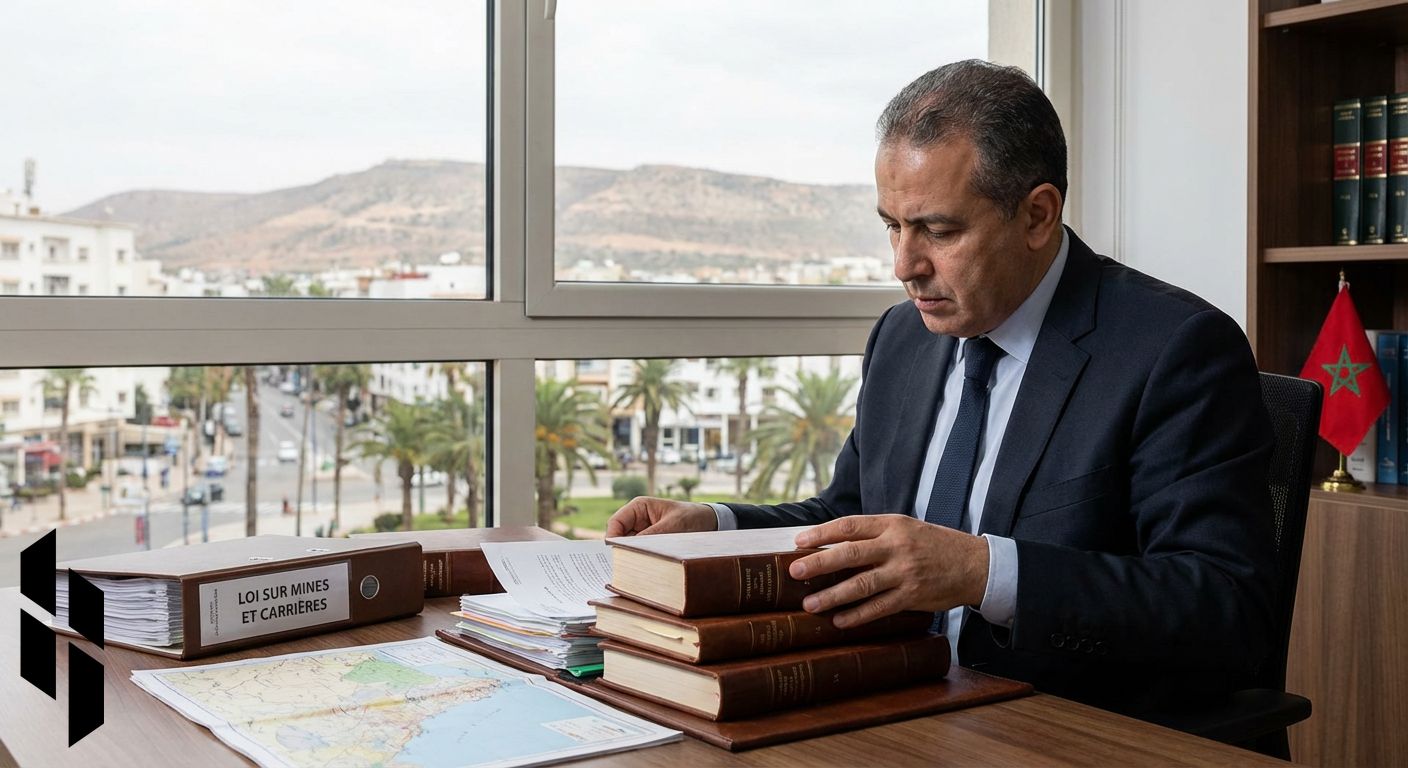
Moroccan Law on Mines and Quarries
Understanding the Legal Framework for Mining and Creative Industries in Morocco
The Moroccan legal landscape is a sophisticated blend of traditional protections and modern regulatory oversight. While the Kingdom is globally recognised for its vast mineral wealth and mining potential, the legal framework governing "extraction" extends beyond the soil to include the extraction of value from intellectual and commercial ventures. Navigating these laws requires an understanding of the specific institutions and codes that maintain order in both the industrial and cultural sectors.
In Morocco, the exploitation of resources—whether they are physical minerals or intellectual creations—is strictly regulated to ensure economic transparency, environmental safety, and the protection of rights. This article explores the essential legal pillars that govern commercial activity, industrial property, and the protection of creative works within the Moroccan territory.
Commercial Oversight and Market Integrity
For any enterprise operating in Morocco, including those in the mining or industrial sectors, the Moroccan Commercial Code (Code de Commerce) serves as the foundational legal text. According to Article 771 of the Commercial Code, specific provisions apply to companies undergoing procedures for "treating the difficulties of the firm." This ensures that even when a business faces financial instability, there is a structured legal path to follow, protecting both the national economy and the rights of creditors.
Furthermore, the financial aspects of large-scale industrial operations are monitored by specialized bodies. For example, Law No. 42.12 regarding the futures market for financial instruments empowers the Central Bank (Bank Al-Maghrib) and the Moroccan Capital Market Authority (AMMC) to conduct investigations and request documentation. Under Article 74 of Law 42.12, members of the market must disclose lists of shareholders holding more than 5% of their capital, ensuring that the ownership of significant economic actors remains transparent.
Industrial and Intellectual Property Protection
In the realm of industrial development and innovation, Morocco has established robust institutions to safeguard "Industrial Property." Decree No. 1.13.99, which implements Law No. 17.97, identifies the Moroccan Office of Industrial and Commercial Property (OMPIC) as the primary body responsible for these matters. Whether it is a new mining technology or a unique industrial process, OMPIC provides the legal framework for registration and protection.
Parallel to industrial property is the protection of creative works. Law No. 25.19 established the Moroccan Office of Copyright and Related Rights (BMDA). This law updated previous legislation (replacing the older Moroccan Copyright Office) to better manage agreements with rights holders and international organizations.
Key protections under the Copyright Law include:
- Architectural Works: Buildings constructed in Morocco and fine arts integrated into buildings are protected.
- Performers' Rights: Under Article 67, performers receive protection if they are Moroccan citizens or if the performance took place on Moroccan soil.
- Producers of Sound Recordings: Protection is granted if the producer is Moroccan or if the first recording was made in the Kingdom.
Regulations in the Cinematographic and Cultural Sectors
Morocco is a premier destination for international filming, which often takes place in its unique geographical landscapes. However, this activity is strictly regulated by Law No. 20.99 regarding the organization of the cinematographic industry.
The legal consequences for failing to adhere to these regulations are significant:
- Filming Permits: Under Article 25, filming any professional tape without a prior permit can result in fines ranging from 50,000 to 100,000 MAD.
- Commercial Exploitation: Article 26 stipulates that exploiting a film commercially without the required "visa" or authorization carries a similar fine.
- Administrative Action: The Director of the Moroccan Cinematographic Centre (CCM) has the authority to order the temporary closure of an offending establishment as a precautionary measure.
Additionally, the preservation of Moroccan heritage is managed through "Legal Deposit" laws. Law No. 68.99 mandates that works published in Morocco must be deposited with the National Library of the Kingdom of Morocco (BNRM). While exact reprints do not require a second deposit, any work containing significant modifications must be re-submitted under Article 8 of this law.
Environmental and Ethical Standards
Modern Moroccan law increasingly emphasizes the "Rules of Good Governance." Law No. 43.12, which governs the Moroccan Capital Market Authority, highlights the necessity of avoiding conflicts of interest and ensuring transparency and market integrity.
While the mining and quarrying sectors specifically rely on environmental impact assessments and specialized permits to protect the Moroccan "Environment" (البيئة), these general commercial principles of equity and transparency apply across all industries. The integration of international standards into Moroccan law ensures that the exploitation of resources—be they minerals, films, or literature—contributes to sustainable national development.
Conclusion and Key Takeaways
The Moroccan legal system provides a comprehensive framework for both industrial and intellectual pursuits. Whether you are involved in "Mining" (التعدين) or the creative arts, compliance with local regulations is mandatory to avoid heavy fines and legal disruptions.
Key Takeaways:
- Institutional Registration: Always register industrial assets with OMPIC and creative works with the BMDA.
- Permit Compliance: Never begin industrial or cinematographic projects without the specific permits required by the CCM or relevant provincial authorities.
- Financial Transparency: Maintain clear records of ownership and financial instruments as required by Bank Al-Maghrib and the AMMC.
- Legal Deposit: Ensure that all published materials are deposited with the National Library to comply with cultural preservation laws.
Get weekly Moroccan legal updates 📬
Exclusive insights on Moroccan law, citizen rights, and new court decisions — delivered straight to your inbox.
No spam. Unsubscribe anytime.
Have More Legal Questions?
Consult 9anon AI now and get accurate, instant answers about your legal situation in seconds.
Related Articles
Check Offences Reform: 2% Settlement Fine 2026
The essential guide to Morocco's 2026 check law reform: understand the 2% settlement fine, new penalties, and family exceptions.
Law 03.23 Criminal Procedure: Cybercrime Impact 2026
Understand the new changes in Law 03.23 of the Criminal Procedure Code and its impact on cybercrime in Morocco. A comprehensive 2026 guide.
Real Estate & Family for MREs: Digitization 2026
Your guide as an MRE to obtaining online administrative and real estate documents, including building permits and custody papers in 2026.